How to Make a Squishy

Soft, slow-rising, satisfying — and completely customizable when you make one yourself.
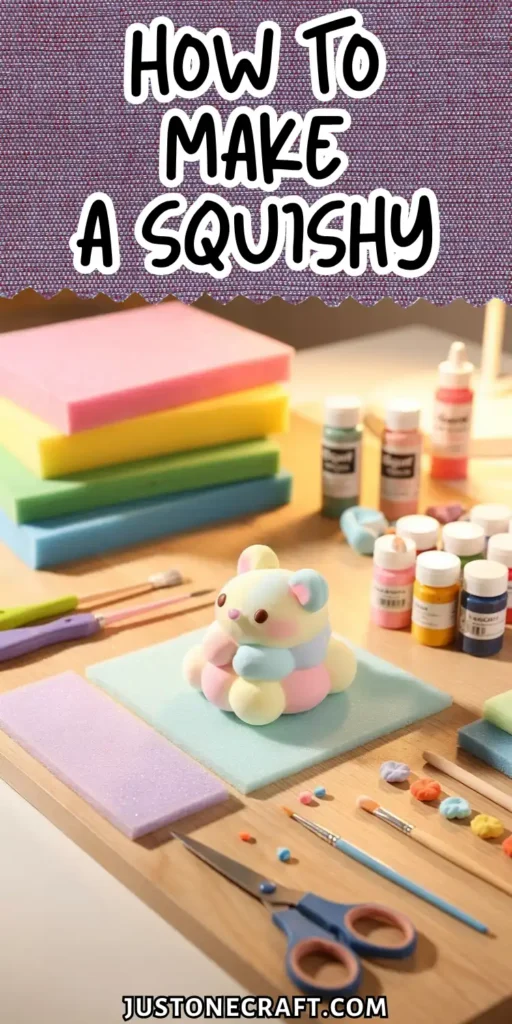
A squishy is a foam toy that compresses under pressure and slowly returns to its original shape, and making one from scratch means you control the density, size, color, and finish in ways no store-bought version allows.
The commercial ones you squeeze at the checkout counter are made in factories with industrial foam — but the DIY version uses the same core material and produces results that are genuinely comparable.
Why Squishies Work — The Physics of Slow-Rising Foam
The slow-rise behavior comes from open-cell polyurethane foam — a network of interconnected air pockets that let air push out slowly when squeezed and trickle back in at the same controlled rate.
Foam density controls the speed: the 1.2–1.8 lb/ft³ range used in commercial squishies has tight enough cells to produce a satisfying, gradual rise. Bath sponge foam is too coarse and springs back in under a second — which is why it never feels right.
Paint without fabric medium cracks under repeated squeezing. Mix them 1:1, seal with a flexible topcoat, and the finish stays pliable indefinitely.
What you need
Foam
- Slow-rise polyurethane foam sheet, 1.2–1.5 lb density, at least 1 inch thick — Foamorder.com and Foam Factory sell this by the sheet. Craft store foam (Darice, Foamies) is closed-cell and will not slow-rise. This is the single most common mistake beginners make. There is no substitute for open-cell polyurethane foam if you want the correct behavior.
Cutting tools
- Electric carving knife or serrated bread knife — A straight craft knife drags and compresses foam, leaving ragged edges. A serrated blade using light sawing motion cuts cleanly. Electric carving knives ($15–$25) produce the cleanest results and are worth it if you plan more than one squishy.
- Fine-grit sandpaper, 220 grit — For smoothing carved edges before painting. Skipped by most beginners, and it shows — unsanded foam has visible cell texture through the paint.
Paint and finishing
- Acrylic craft paint (DecoArt or Apple Barrel) — 2–3 colors. Standard 2 oz bottles are enough for one squishy.
- Fabric medium (Liquitex or DecoArt brand) — Mix at a 1:1 ratio with paint. This is the step most tutorials omit and the reason painted squishies crack. Do not skip it.
- Flexible sealant spray — Plasti-Dip Clear or Mod Podge Extreme Glitter Sealer (for matte, use Mod Podge Matte). Apply as a final coat. Standard Mod Podge original is not flexible enough and will crack and peel.
- Foam brushes, 1-inch — 3–4 brushes. Bristle brushes leave stroke marks in foam; foam brushes lay paint flat.
Extras
- Pencil or air-erasable fabric marker — For drawing your shape onto the foam before cutting
- Reference image — Print or display the shape you’re copying at the actual finished size
Step-by-step
Step 1 — Draw and Cut Your Base Shape
Draw your shape directly onto the foam sheet with a pencil. Keep the design at least 3 inches in its smallest dimension — smaller than that and the foam doesn’t have enough material to produce a satisfying squeeze.
Cut along the outline with your serrated knife using light, consistent sawing strokes. Do not press down. Let the blade do the work. You should see clean, even edges without visible tearing or compression.
The most common mistake here is rushing the cut by pressing down, which compresses the foam and creates a wedge-shaped edge instead of a straight one.
Step 2 — Carve Dimension into the Shape
Squishies that look flat look cheap. Use your serrated knife to round all sharp edges by cutting at a 45-degree angle, then continue rounding with small shaving cuts.
A bread roll shape should look like a small pillow, not a slice of foam. Spend 5–8 minutes on this step.
When you hold it up and look at it from the side, you should see a smooth, curved profile — not a rectangle with softened corners.
Step 3 — Sand the Entire Surface
Rub 220-grit sandpaper over the entire surface using circular motions for 2–3 minutes. The foam will produce a fine dust and the surface will go from visibly textured to smooth and slightly velvety. This step is what lets paint sit flat instead of sinking into the foam grain.
Step 4 — Apply Your Base Coat
Mix acrylic paint with fabric medium at exactly 1:1 ratio in a small dish — 1 teaspoon of each per application is enough for one coat on a standard 3-inch squishy. Apply with a foam brush using patting motions, not strokes.
The paint should look slightly matte and even, with no shiny wet patches. Apply 3–4 thin coats, letting each dry for 20 minutes. After the final coat, the squishy should feel slightly stiffer but still compress fully.
Step 5 — Add Details and Shading
Load a small amount of a darker shade of your base color onto a foam brush, dab most of it off onto a paper towel until the brush looks almost dry, then lightly pounce it onto recessed areas — the underside of curves, edges, any indentations.
This is called drybrushing and it creates the depth that makes a squishy look painted rather than dipped. Add highlight color the same way on raised surfaces using a lighter shade or white.
Step 6 — Seal the Finished Squishy
Shake your flexible sealant spray for 30 seconds, then apply from 10–12 inches away in a slow, even pass. One light coat, not a soaking spray. Let dry 30 minutes.
Apply a second coat. After drying, squeeze the squishy fully — it should compress and rise without any cracking sound or visible paint separation. If you hear cracking, apply one more coat of the paint-fabric medium mix and re-seal.
Storing and Caring for Your Squishy
Keep finished squishies away from direct sunlight — UV light yellows polyurethane foam within a few weeks of sustained exposure. Store in a zip-lock bag or display box when not in use.
If the surface gets sticky over time (common in humid climates), a light additional coat of sealant spray restores it. Do not wash squishies under water; moisture degrades the foam cell structure from the inside and the squishy will stop rising properly.
Variations
Scented squishy — Add 8–10 drops of fragrance oil (not essential oil — fragrance oil is thicker and binds to foam better) into your paint mix before applying. The scent bakes into the paint layers and lasts several months with regular squeezing.
Jumbo squishy — Use foam at least 3 inches thick and scale your design to 6–8 inches. Jumbo squishies need 5–6 paint coats instead of 3–4 because the larger surface area absorbs more. Rise time is naturally slower due to greater foam volume, which is part of the appeal.
Glitter or iridescent finish — Replace your final sealant coat with Mod Podge Extreme Glitter or an iridescent topcoat spray. Apply over fully dried paint. The glitter coat is slightly less flexible than plain sealant, so make sure your base paint layers are thorough before applying it.
Quick Troubleshooting
| Problem | Likely cause | Fix |
|---|---|---|
| Squishy springs back too fast | Wrong foam type (closed-cell) | Replace with open-cell polyurethane foam — no workaround exists |
| Paint cracks when squeezed | No fabric medium in paint, or coat too thick | Mix 1:1 paint-to-fabric-medium; apply thinner coats |
| Paint peels off in sheets | Sealant not flexible, or foam not sanded | Re-sand, repaint with fabric medium, use Plasti-Dip or flexible Mod Podge |
| Surface looks lumpy and textured | Foam not sanded before painting | Sand with 220 grit, apply one thin base coat, re-evaluate |
| Foam tore during cutting | Pressing down instead of sawing | Use lighter pressure and longer strokes; switch to serrated blade |
| Squishy feels stiff after painting | Too many thick coats | Fewer, thinner coats with full drying between; fabric medium helps |
Final Tip
Every problem with a squishy — cracking paint, fast rise, lumpy surface — traces back to one of three things: wrong foam, paint without fabric medium, or sealant without flexibility.
If something goes wrong, check those three before assuming the technique failed. The technique is simple. The materials are specific. Get those right and the rest is just sculpting and painting practice that improves with every batch.