Best Paper Types for Crafting: A Simple Guide for Every Project

If you’ve ever stood in the craft aisle staring at dozens of paper options, you know how confusing it can get.
Cardstock, vellum, tissue paper, scrapbook paper — they all look similar at first glance, but each one behaves very differently once you start cutting, folding, gluing, or painting.
Choosing the right paper can make the difference between a project that looks polished and one that falls apart halfway through.
This guide breaks down the most popular paper types used in crafting, what makes each one special, and which projects they suit best.
1. Cardstock
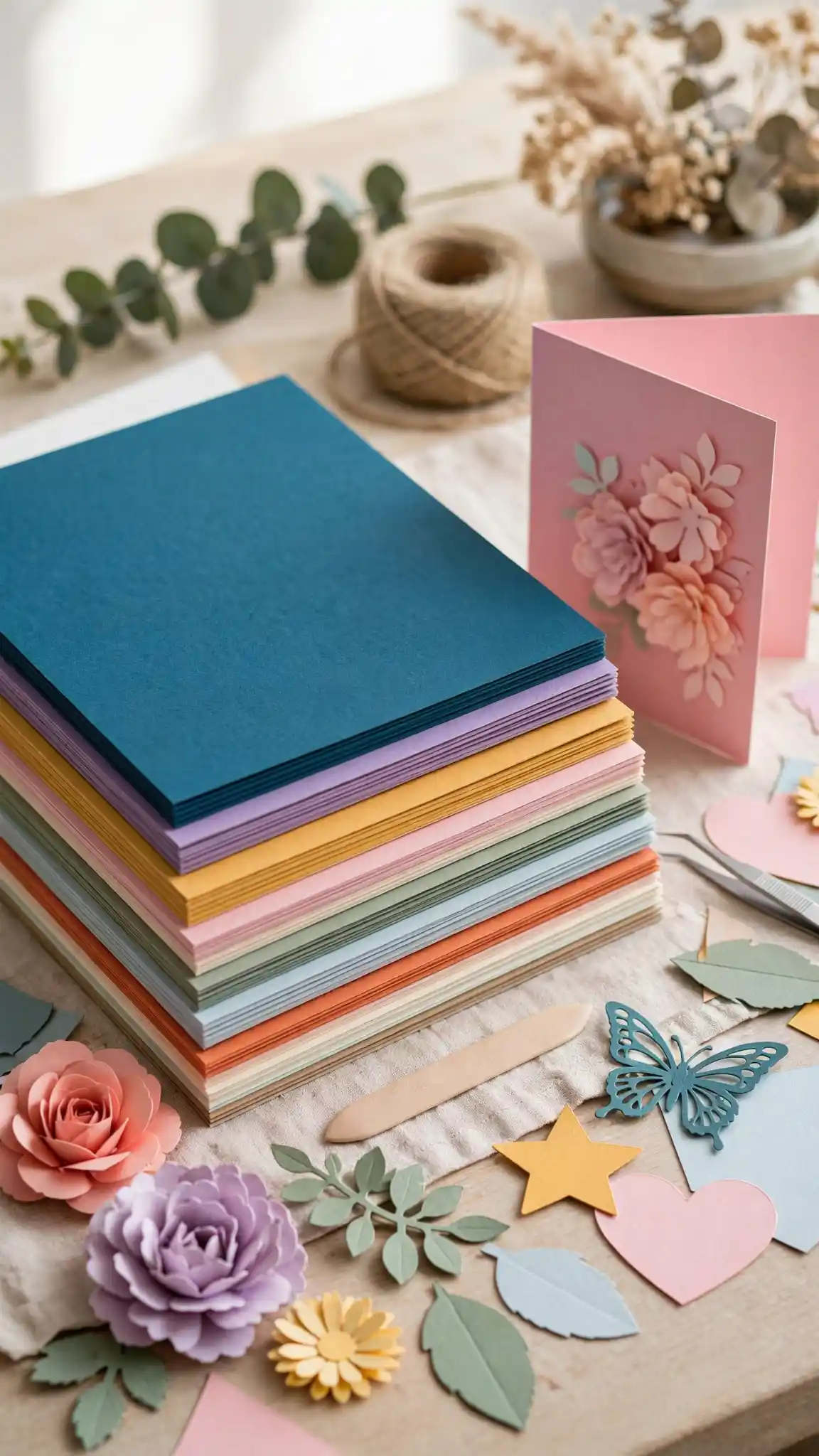
Cardstock is one of the most versatile papers in any crafter’s toolkit. It’s thicker and sturdier than regular printer paper, which makes it perfect for projects that need to hold their shape.
Best for: Greeting cards, invitations, scrapbooking, paper flowers, and die-cutting projects.
Cardstock comes in a wide range of weights, usually measured in “pt” or “gsm.” Heavier cardstock (around 100 to 110 lb) works well for cards that need to stand upright, while lighter weights are easier to fold neatly without cracking.
⚖️ Weight Guide
Lighter = folds easily • Heavier (100-110lb) = stands upright
2. Construction Paper
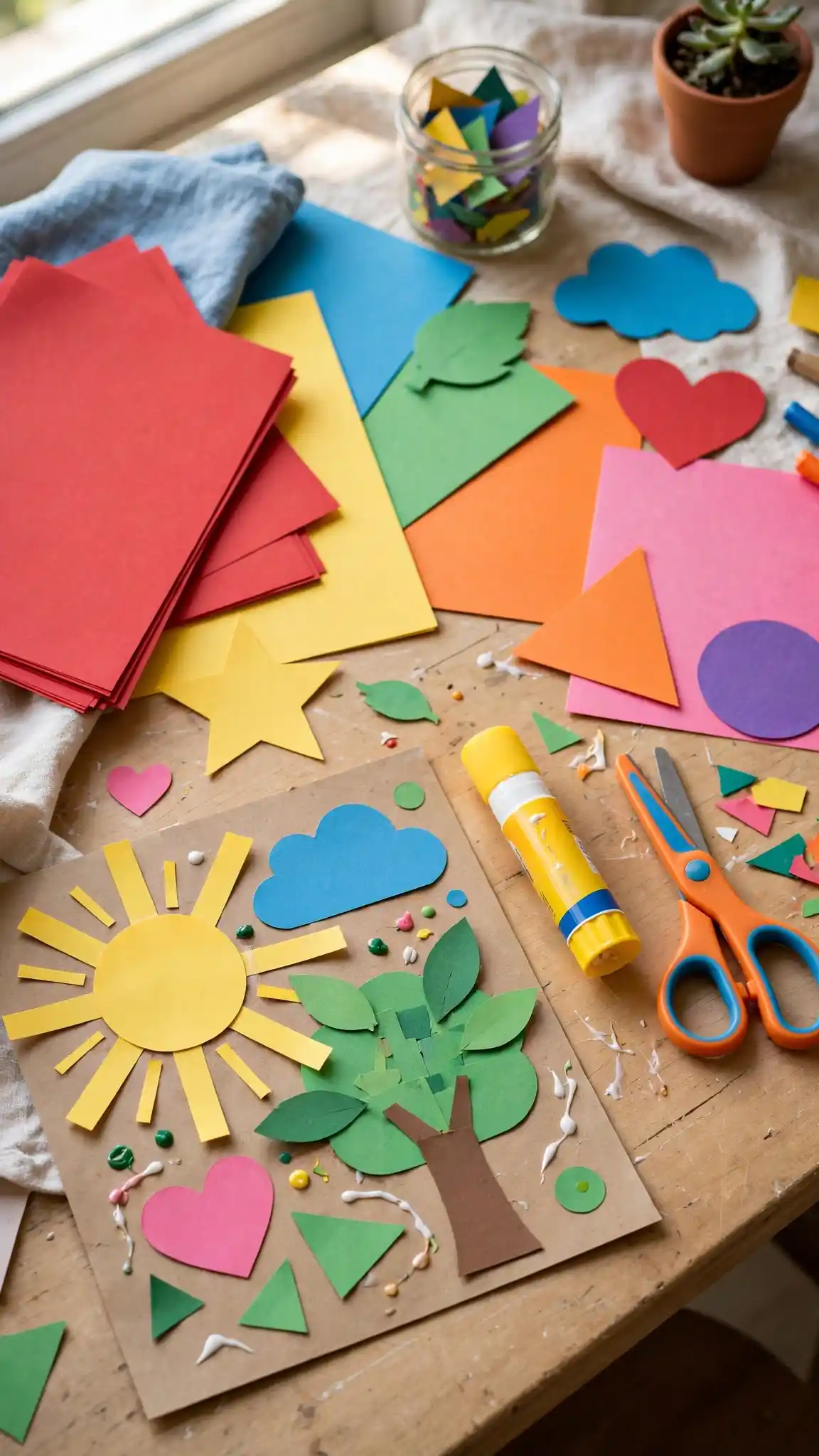
This is often the first paper kids use in school projects, and for good reason. Construction paper is affordable, comes in bright colors, and is easy to cut and glue.
Best for: Kids’ crafts, classroom projects, simple collages, and quick decorations.
Keep in mind that construction paper fades over time and isn’t ideal for long-lasting keepsakes, since it can become brittle with age.
3. Tissue Paper
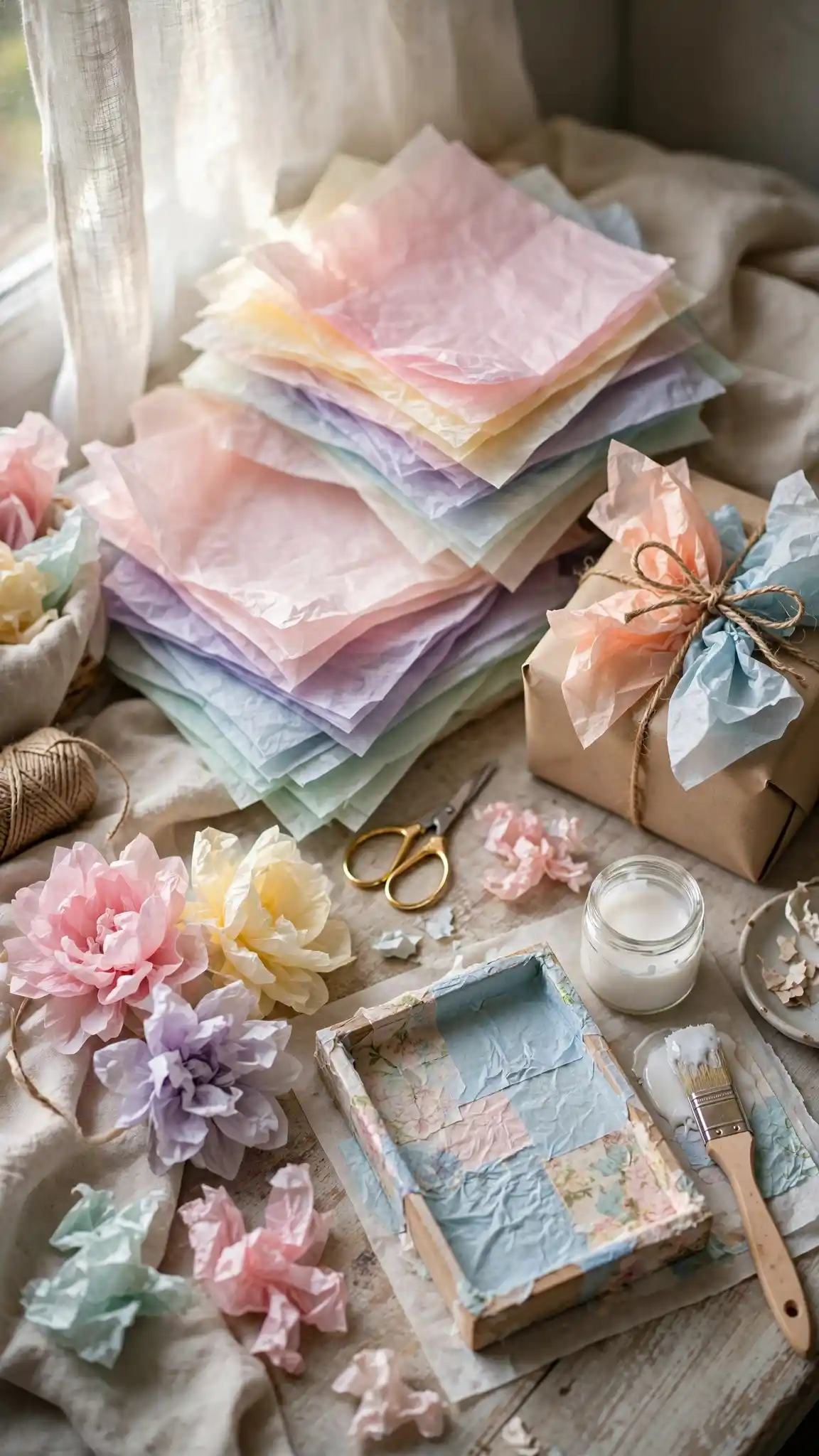
Tissue paper is lightweight, delicate, and slightly see-through. It’s not meant for structure, but it adds beautiful texture and color to a project.
Best for: Paper flowers, gift wrapping, pom-poms, decoupage, and layered art projects.
Because it’s so thin, tissue paper works best when combined with glue or mod podge to add strength, especially in decoupage projects.
4. Vellum
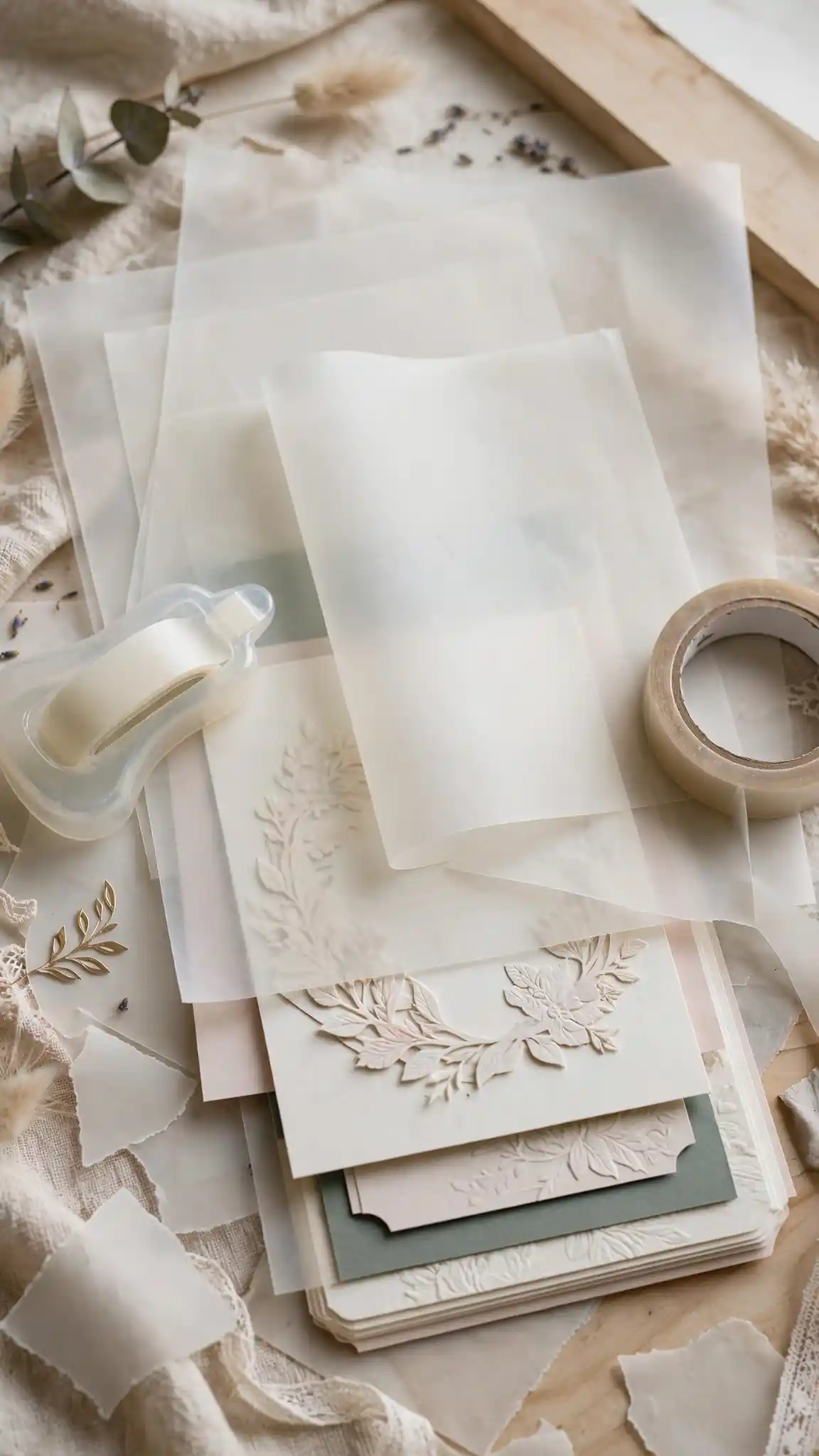
Vellum has a smooth, semi-transparent finish that gives crafts an elegant, soft look. It’s sturdier than tissue paper but still delicate compared to cardstock.
📌 Adhesive Tip: Skip regular glue — vellum doesn’t absorb it. Use double-sided tape or vellum-specific adhesive instead.
Best for: Wedding invitations, layered card designs, and overlays for a frosted-glass effect.
Vellum doesn’t absorb glue the same way regular paper does, so crafters often use double-sided tape or vellum-specific adhesive for the best results.
5. Scrapbook Paper (Patterned Paper)
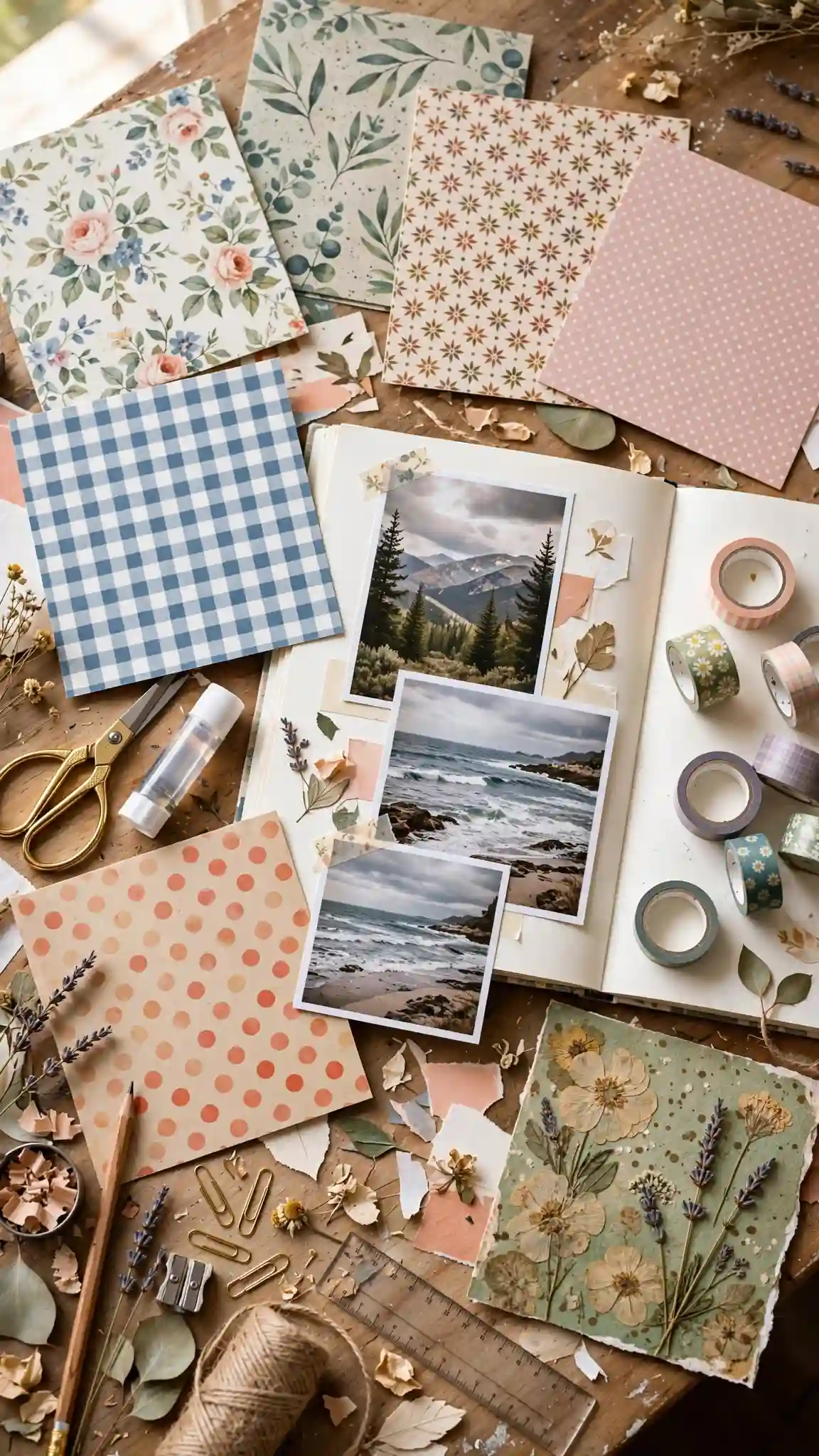
Scrapbook paper usually comes in square sheets with printed designs, patterns, or textures on one side. It’s a favorite among memory-keepers and card makers.
Best for: Scrapbooking, card backgrounds, journaling pages, and mixed media art.
Many scrapbook papers are acid-free, which helps prevent yellowing over time — an important feature if you’re preserving photos or keepsakes.
6. Kraft Paper
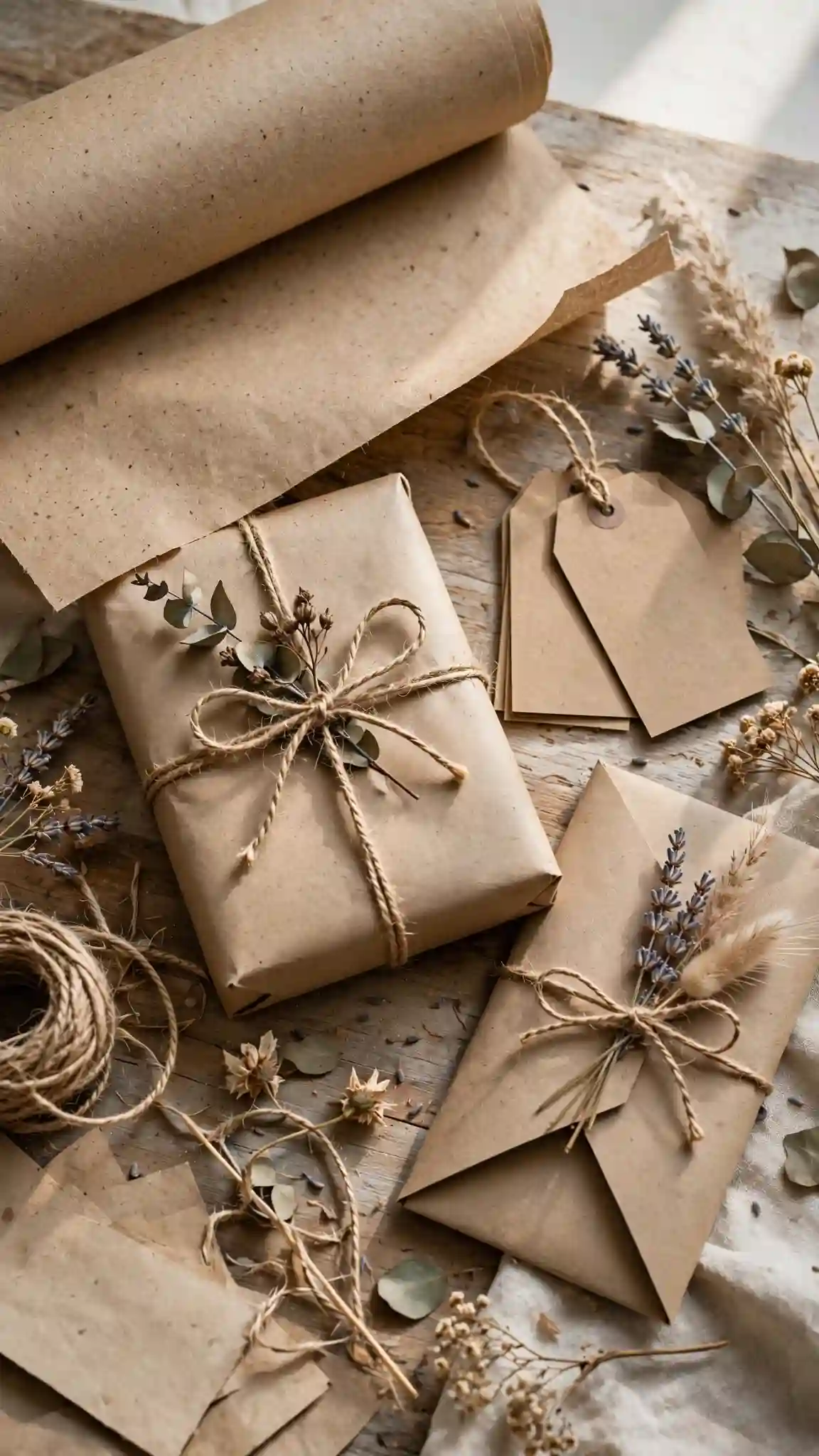
Kraft paper has a natural, brown, recycled look that pairs beautifully with rustic or minimalist designs. It’s strong and slightly textured.
Best for: Gift wrapping, tags, rustic invitations, and mixed with other papers for contrast.
Its earthy tone makes it a popular choice for eco-friendly or vintage-style crafts.
7. Origami Paper
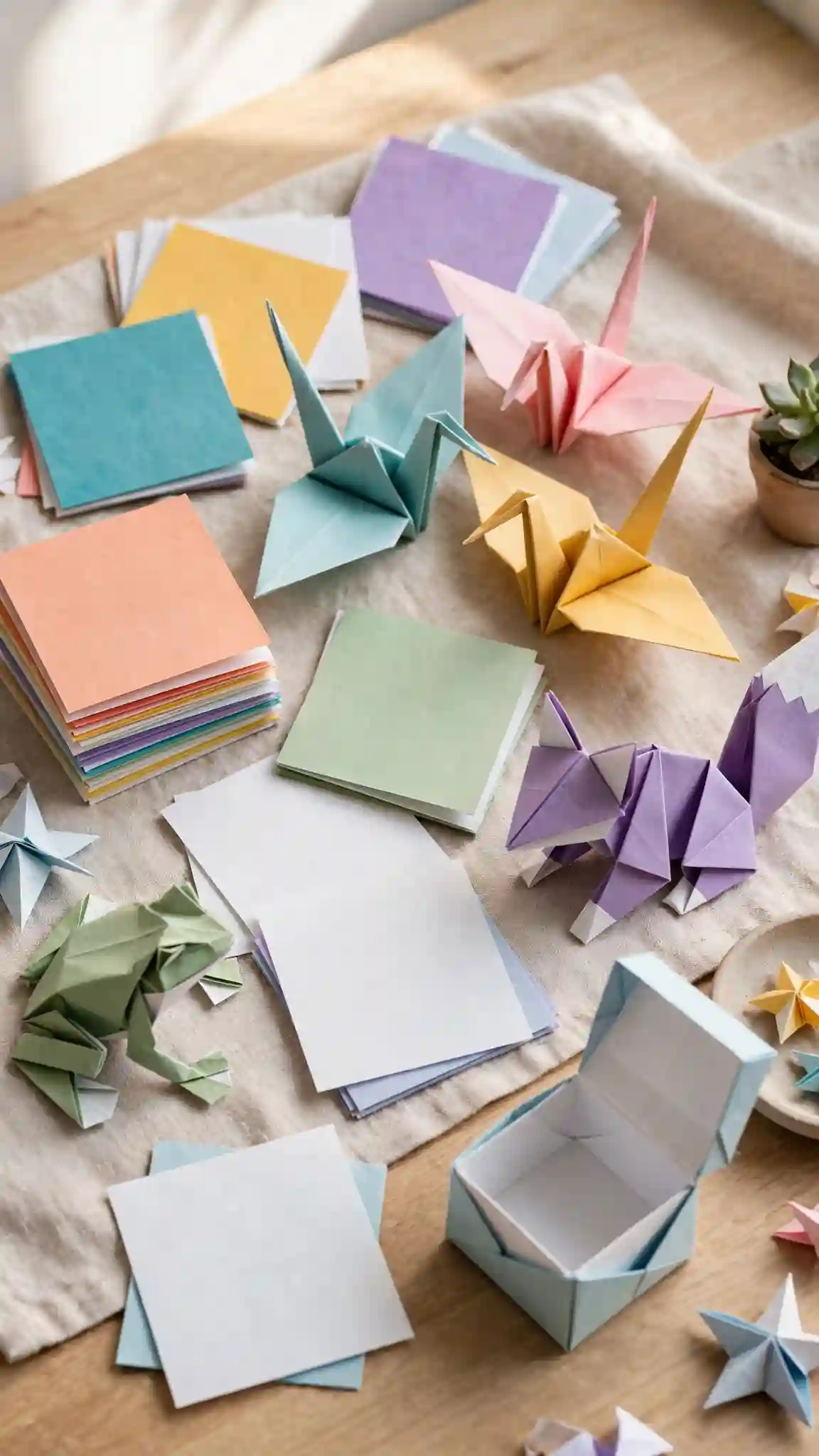
Origami paper is thin but crisp, designed to hold sharp folds without tearing. It often comes pre-cut into perfect squares, with color on one side and white on the other.
Best for: Paper folding, origami animals, decorative boxes, and paper cranes.
If you’re just starting with origami, this paper is much easier to work with than regular printer paper, which tends to be too thick for intricate folds.
8. Watercolor Paper
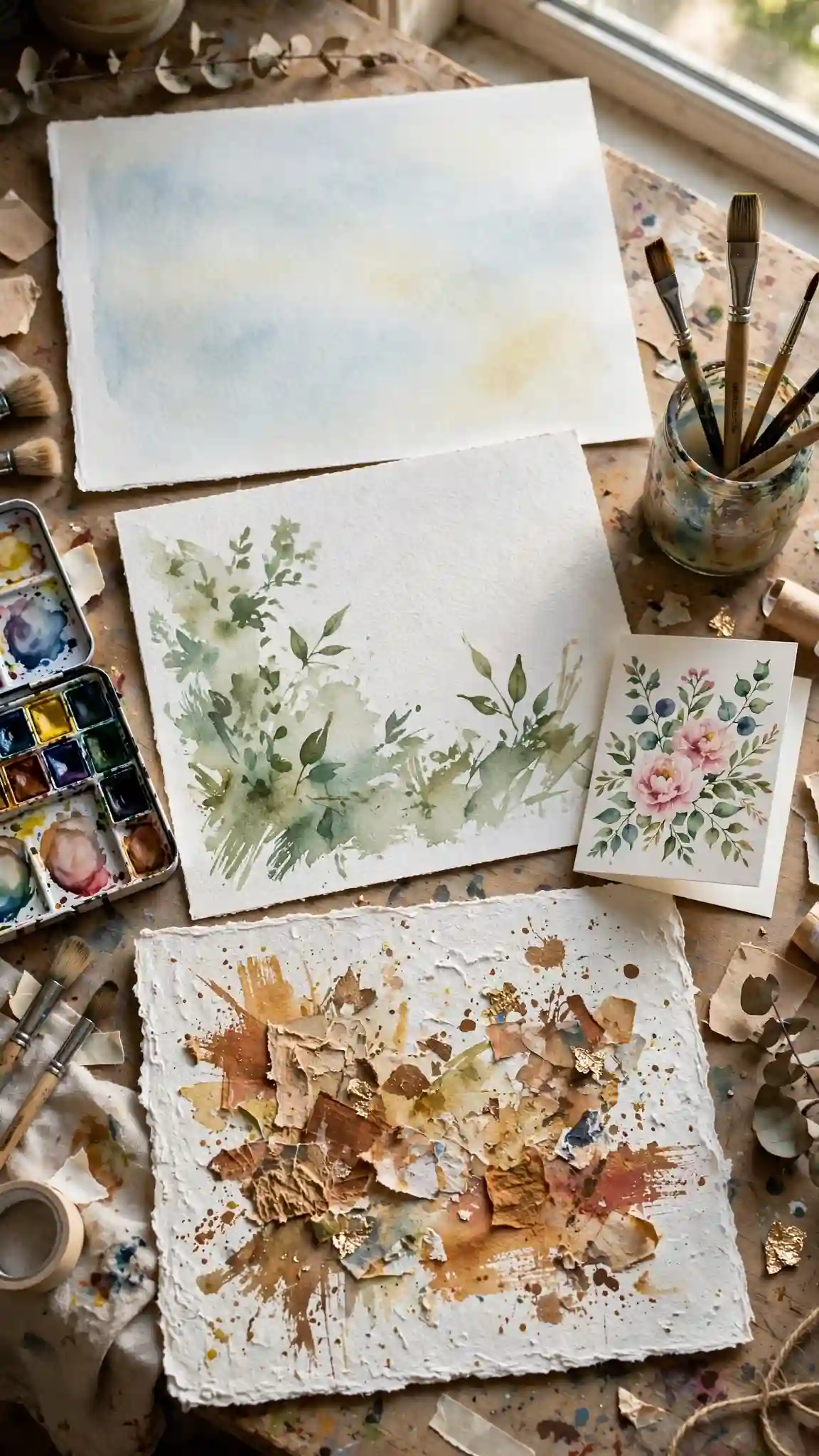
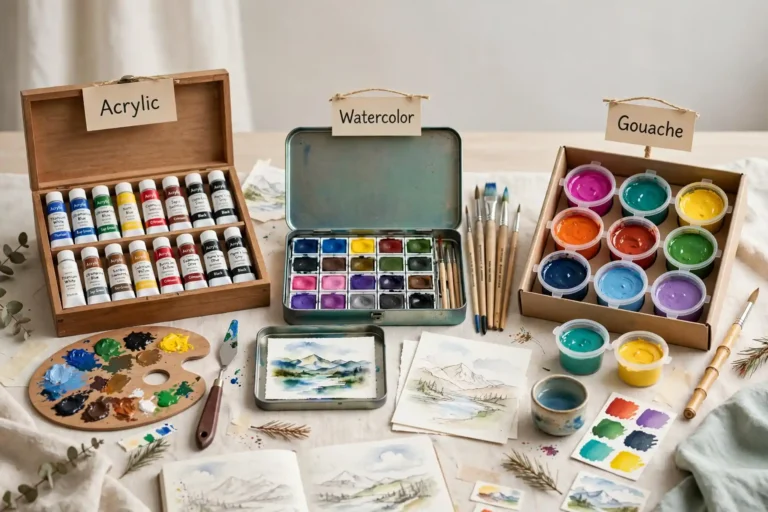
Watercolor paper is thick, textured, and designed to absorb liquid without warping or tearing.
Smooth
Slightly Textured
Heavily Textured
Best for: Painting, mixed media art, and card fronts that will be painted or stamped with ink.
It usually comes in three textures: hot press (smooth), cold press (slightly textured), and rough (heavily textured), depending on the effect you want.
9. Handmade or Specialty Paper
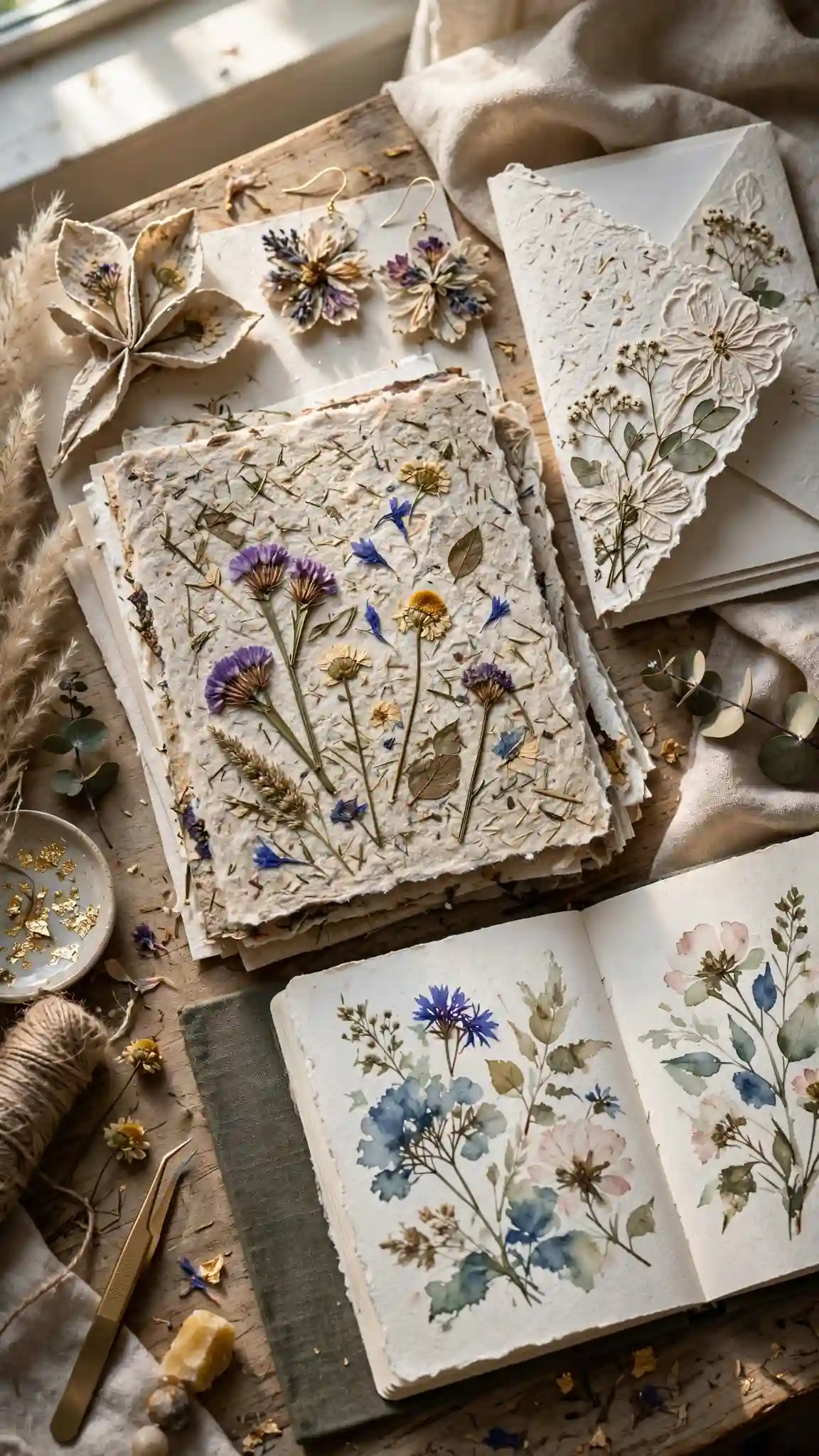
Handmade paper often includes visible fibers, pressed flowers, or unique textures. It’s typically more expensive but adds a one-of-a-kind touch.
Best for: High-end invitations, art journals, and statement pieces where texture matters.
Tips for Choosing the Right Paper
✅ Ask Yourself First
🔹 Does it need to fold, hold weight, or absorb paint?
🔹 Do I need heavy structure or delicate detail?
🔹 Does this need to last for years (acid-free)?
- Think about function first. Ask whether the project needs to fold, hold weight, absorb paint, or just look decorative.
- Match the weight to the purpose. Heavier paper for structure, lighter paper for delicate details.
- Consider longevity. Acid-free paper is best for anything meant to last, like photo albums or keepsakes.
- Test before committing. If you’re unsure how a paper will behave, try folding, cutting, or painting a small scrap first.
Final Thoughts
There’s no single “best” paper for crafting — it all depends on what you’re making. Cardstock is a safe all-purpose choice, tissue paper adds softness and texture, and watercolor paper is essential for anyone working with paint.
Once you understand what each type is designed for, choosing the right paper becomes second nature, and your projects will look more professional with far less frustration.
The next time you’re planning a craft project, take a moment to match your paper to your purpose. It’s a small decision that makes a big difference in the final result.