A Beginner’s Guide to Knitting and Crochet

There’s something deeply satisfying about turning a simple strand of yarn into a scarf, a blanket, or a cozy pair of socks.
If you’ve ever watched someone’s hands move rhythmically with needles or a hook and wondered how they do it, you’re in the right place.
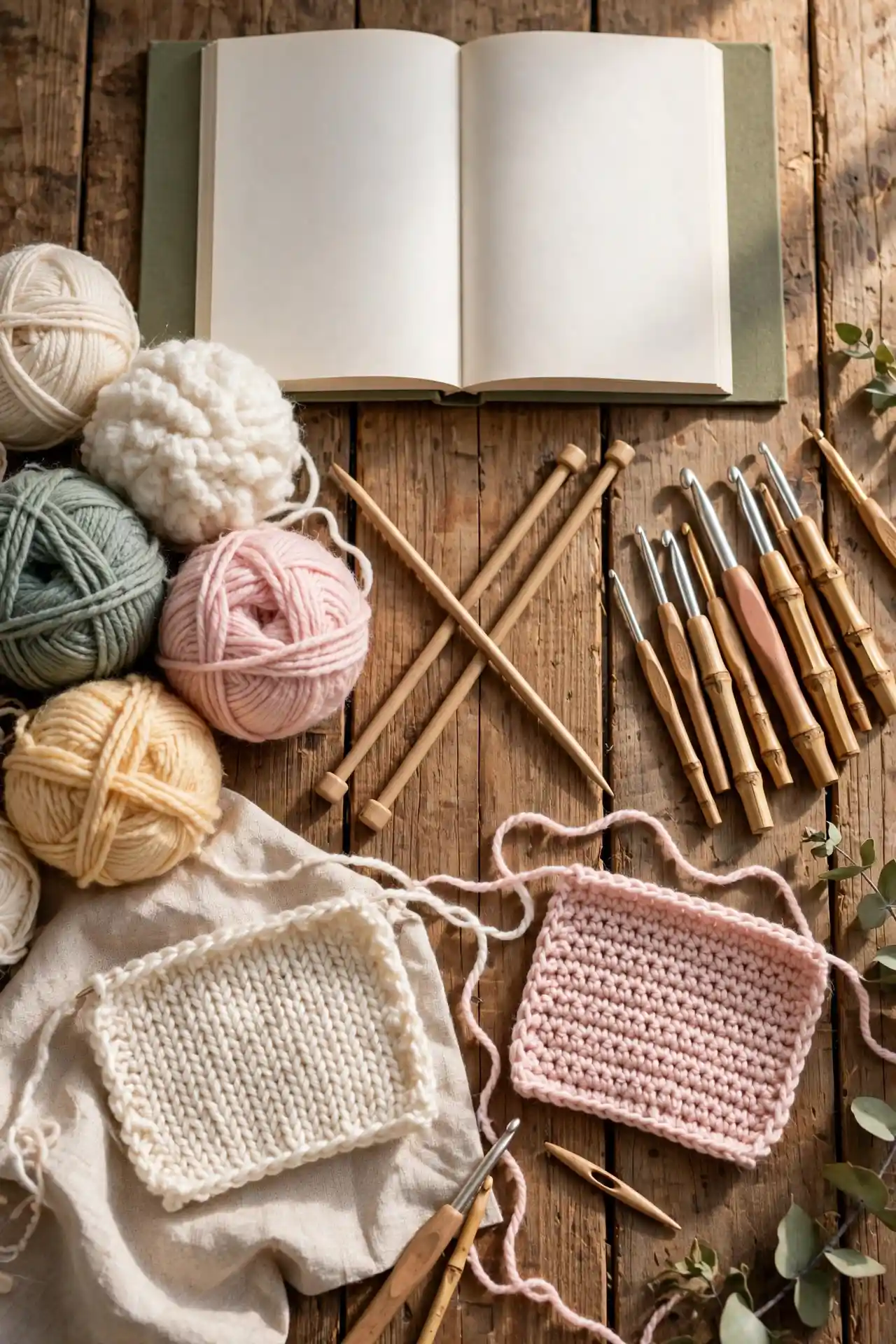
Knitting and crochet are two of the most rewarding hobbies you can pick up, and neither requires any special talent to get started — just patience, a little practice, and the willingness to mess up a few stitches along the way.
Knitting vs. Crochet: What’s the Difference?
Knitting uses two needles and works with many live stitches at once, while crochet uses a single hook and creates one stitch at a time.
🧶 Knitting
2 needles, smoother fabric, great for garments
🪝 Crochet
1 hook, thicker texture, easier to fix mistakes
Many beginners find crochet easier because mistakes are simpler to spot and fix. Knitting produces a smoother fabric that’s ideal for garments, whereas crochet creates a thicker, more textured fabric, making it perfect for blankets and stuffed toys.
Getting Started: What You’ll Need
You don’t need to invest much money to try either craft. Here’s a simple starter list:
For Knitting:
- A pair of straight knitting needles (size US 8 or 9 is beginner-friendly)
- Medium-weight yarn (worsted weight is easiest to work with)
- A yarn needle for weaving in ends
- Scissors
For Crochet:
- A crochet hook (size H/8 or I/9 is a good starting point)
- Medium-weight yarn
- A yarn needle
- Scissors
Avoid slippery or textured yarns at first — they’re harder to control. Stick to a smooth, light-colored acrylic or cotton yarn so you can clearly see your stitches while learning.
Learning the Basic Stitches
🧶 Master First (Knit)
Knit stitch → Purl stitch
🪝 Master First (Crochet)
Single crochet → Double crochet
Knitting Basics
The two foundational stitches in knitting are the knit stitch and the purl stitch. Once you master these two, you can create almost any pattern, since combinations of knits and purls form ribbing, seed stitch, and countless textures.
Start by learning to cast on (creating your first row of loops), then practice the knit stitch until it feels natural before moving to purl.
Crochet Basics
Crochet also starts with a foundation — a slip knot and a chain stitch. From there, the basic stitches to learn are the single crochet, double crochet, and half double crochet.
These vary mainly in height and are used to control the density and drape of your fabric.
Most beginner patterns rely heavily on single and double crochet, so mastering those two will let you tackle a huge range of projects.
Start with Simple Projects
It’s tempting to want to jump straight into a sweater or an intricate lace shawl, but starting small builds confidence and skill without frustration. Good beginner projects include:
- A basic garter stitch scarf (knitting)
- A simple washcloth or dishcloth (both crafts)
- A single crochet blanket square
- A knit or crochet coaster set
These projects let you practice tension, stitch consistency, and finishing techniques without the pressure of shaping sleeves or necklines.
Common Beginner Mistakes (and How to Avoid Them)
⚠️ Most Common Slip-Up: Holding yarn too tightly. Relax your hands — stiff, uneven stitches almost always trace back to tension.
- Holding the yarn too tightly — This creates uneven, stiff stitches. Relax your hands and let the yarn flow more loosely.
- Not counting stitches — Miscounting leads to uneven edges. Count your stitches at the end of each row until it becomes second nature.
- Using the wrong yarn weight for the pattern — Always check that your yarn matches what the pattern calls for, especially as a beginner.
- Giving up too soon — Both crafts have a learning curve. Mistakes are part of the process, not a sign you’re “bad” at it.
Tips for Staying Motivated
Learning a new craft can be frustrating at first, especially when your stitches look nothing like the tutorial. A few tips to keep you going:
- Watch short video tutorials alongside written instructions — seeing the motion helps enormously.
- Join a local class or an online community where you can ask questions and share progress.
- Celebrate small wins, like finishing your first row without a mistake.
- Keep your first few projects low-stakes. A slightly wonky first scarf is still a scarf you made with your own hands.
Final Thoughts
Knitting and crochet are wonderfully accessible hobbies that reward patience with tangible, wearable results.
Whether you choose the rhythmic click of two needles or the flowing motion of a single hook, the most important step is simply starting. Pick up your yarn, learn one stitch at a time, and don’t worry about perfection.
Every knitter and crocheter, no matter how skilled, once sat exactly where you are now — holding yarn for the very first time and wondering how it all comes together. With a little practice, you’ll be creating cozy, handmade pieces before you know it.