Acrylic vs. Watercolor vs. Gouache: Paint Types Compared for Crafters

If you’ve ever stood in the craft store aisle staring at rows of paint tubes, wondering which one to grab, you’re not alone.
Acrylic, watercolor, and gouache are three of the most popular paint types for crafters, and each one behaves very differently on paper or canvas.
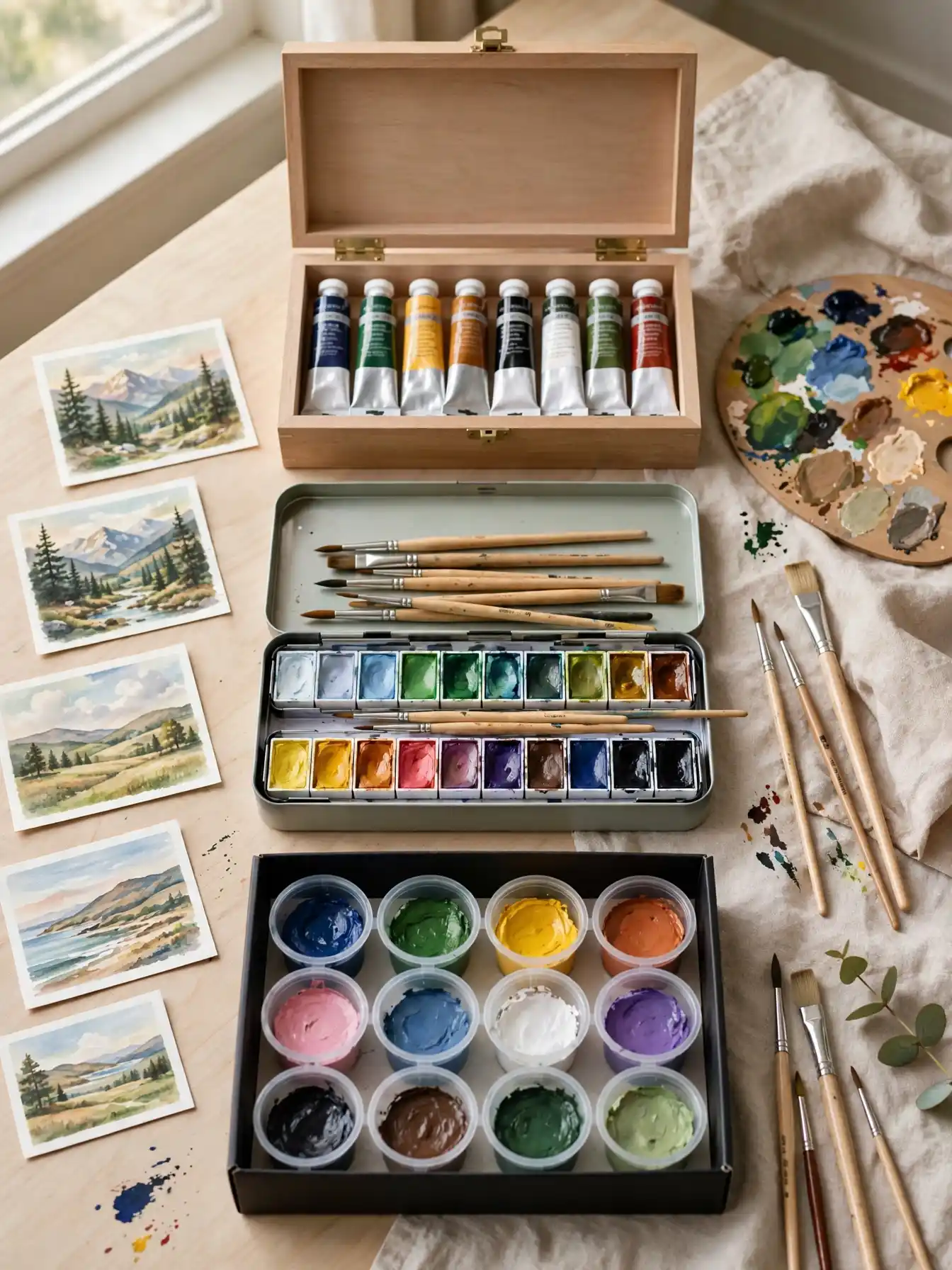
Picking the right one can save you hours of frustration and help your project turn out exactly how you pictured it. Let’s break down what makes each paint unique, so you can choose with confidence.
Acrylic Paint: The Versatile Workhorse
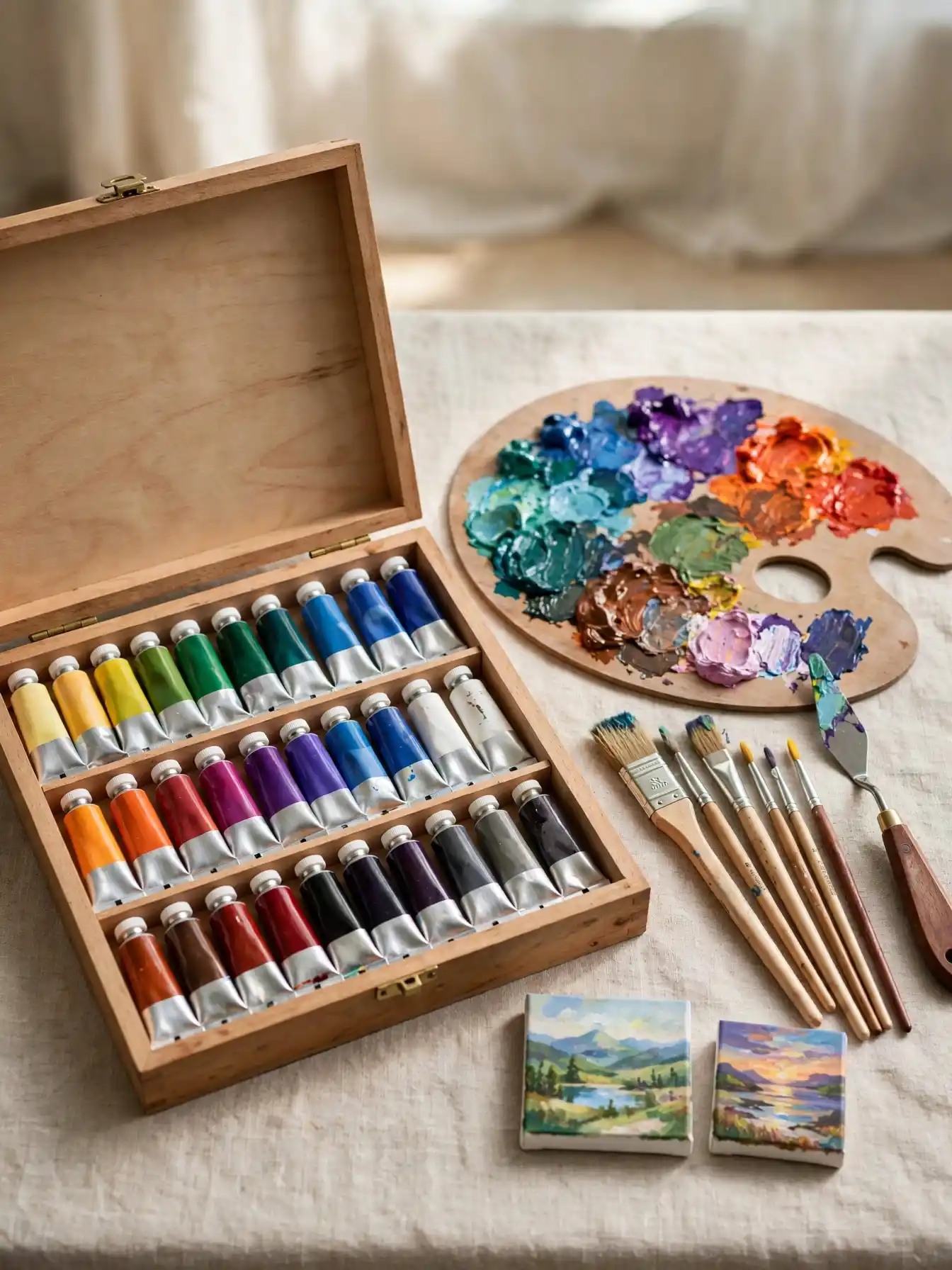
Acrylic paint is made from pigment suspended in a plastic-based polymer emulsion. It’s water-soluble while wet, but once it dries, it becomes permanent and water-resistant.
This makes acrylic one of the most forgiving and adaptable paints for crafters of all skill levels.
Strengths:
- Dries fast, so you can layer colors quickly without waiting long between coats
- Works on almost any surface, including wood, canvas, fabric, glass, and rocks
- Comes in a huge range of finishes, from matte to glossy to metallic
- Mistakes are easy to cover up since it dries opaque
Considerations:
- Fast drying time can be a downside if you enjoy blending colors slowly
- Brushes need immediate cleaning, since dried acrylic ruins bristles
- Not ideal for delicate, translucent effects
Acrylic is a great choice for crafters working on mixed-media projects, painted furniture, canvas art, or anything that needs durability. Beginners often start here because mistakes are easy to paint over.
Watercolor: Light, Transparent, and Flowing
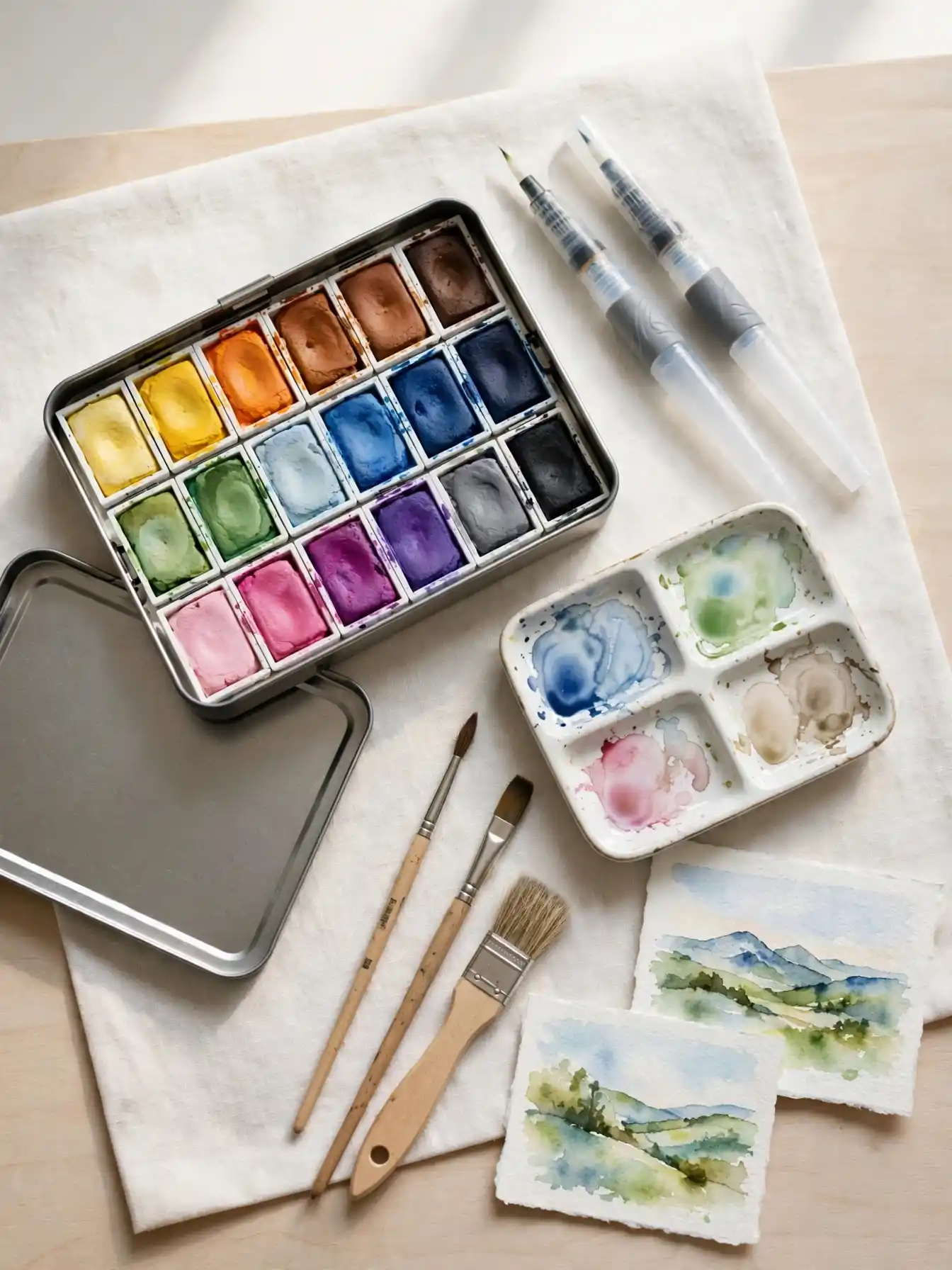
Watercolor paint uses pigment mixed with a water-soluble binder, usually gum arabic. Unlike acrylic, watercolor stays reactivatable even after it dries, meaning you can add water again later to soften or blend colors.
Strengths:
- Creates soft, transparent washes that are perfect for skies, water, and delicate florals
- Lightweight and portable, ideal for travel journaling or plein air sketching
- Colors can be layered to build depth through transparency
- Easy to clean up and reuse leftover paint
Considerations:
- Harder to correct mistakes since the paint is transparent and forgiving of subtlety rather than coverage
- Requires proper watercolor paper to prevent buckling
- Colors dry lighter than they appear when wet, which takes practice to predict
Watercolor is beloved by crafters who enjoy journaling, greeting cards, botanical illustration, and any project where a soft, airy look is the goal. It rewards patience and a gentle hand.
💧 Unique Trait: Even after drying, add water again to soften or blend colors — acrylic can’t do this once cured.
Gouache: The Best of Both Worlds
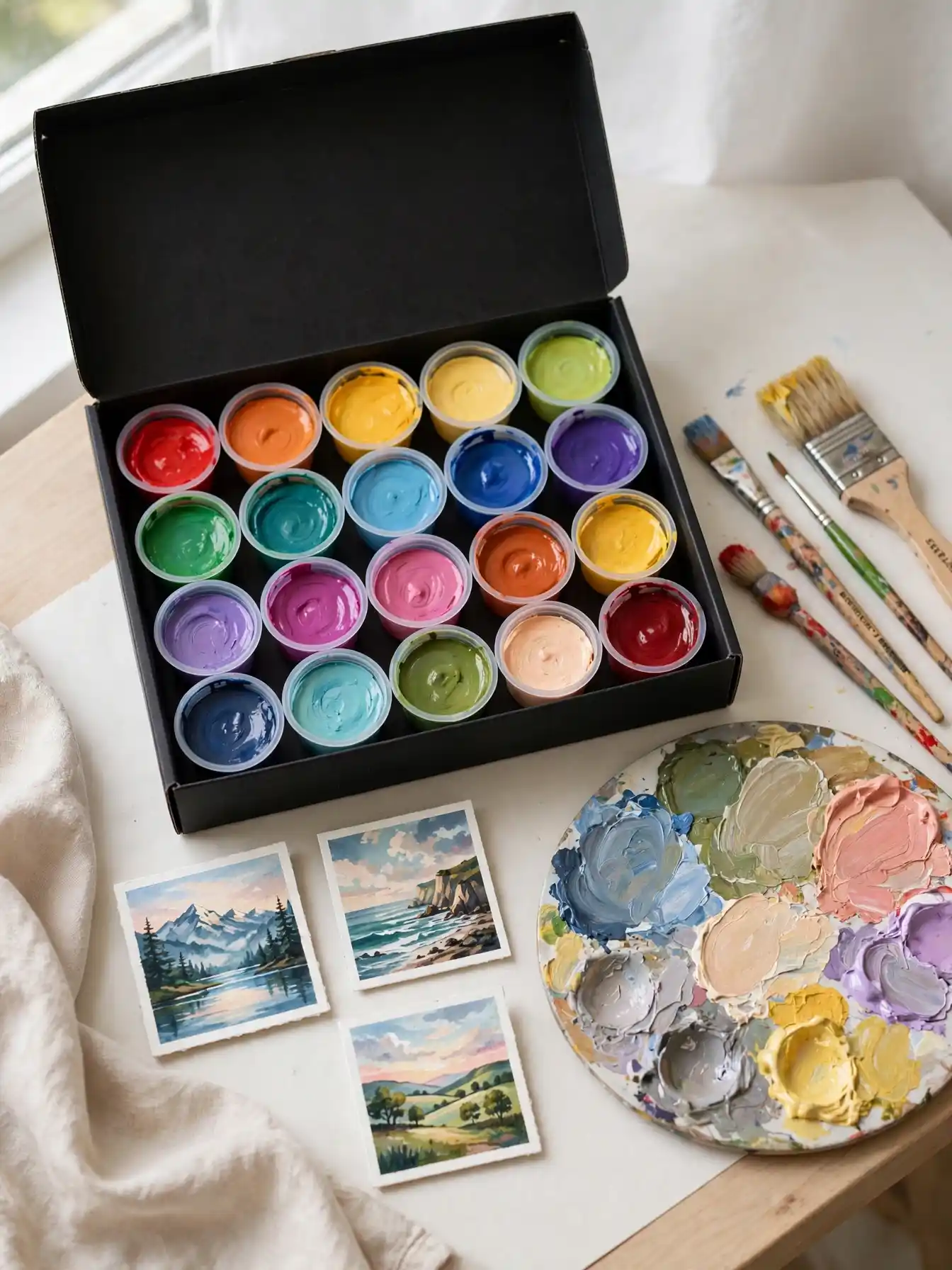
Gouache (pronounced “gwash”) is often described as a hybrid between acrylic and watercolor. Like watercolor, it’s water-based and can be reactivated with water after drying.
But like acrylic, it dries to an opaque, matte finish rather than a transparent wash.
Strengths:
- Opaque coverage means you can paint light colors over dark ones, unlike watercolor
- Produces a smooth, velvety matte finish that looks flat and clean
- Easy to correct mistakes by simply painting over them
- Great for detailed illustration work, lettering, and design mockups
Considerations:
- Can crack if applied too thickly
- Colors may shift slightly in tone as they dry, similar to watercolor
- Not as durable or water-resistant as acrylic once dry
Gouache has become a favorite among illustrators, greeting card makers, and crafters who want the vibrancy of opaque color with the ease of a water-based medium. It’s especially popular for flat, graphic-style artwork.
🎭 The Hybrid: Water-reactivatable like watercolor, but opaque like acrylic — light colors can cover dark ones.
Quick Comparison Chart
| Feature | Acrylic | Watercolor | Gouache |
|---|---|---|---|
| Finish | Glossy to matte | Transparent | Matte, opaque |
| Drying Time | Fast | Fast | Fast |
| Reactivates with water once dry | No | Yes | Yes |
| Best for beginners | Yes | Moderate | Yes |
| Surface flexibility | Very high | Paper only | Paper, illustration board |
| Correcting mistakes | Easy | Difficult | Easy |
Which One Should You Choose?
Think about the kind of project you have in mind. If you want a paint that works on almost anything and dries permanently, acrylic is your best bet.
If you’re drawn to soft, glowing, transparent effects, watercolor will give you that dreamy quality.
And if you like the idea of bold, flat color with an easy learning curve, gouache offers a nice middle ground. Many crafters actually end up using all three, depending on the project.
A mixed-media artist might use acrylic as a base layer, add watercolor washes for atmosphere, and finish with gouache details for crisp highlights. There’s no rule that says you have to pick just one.
Final Thoughts
Understanding the differences between acrylic, watercolor, and gouache takes the guesswork out of your next craft supply run.
Each paint type has its own personality, and once you get a feel for how they behave, you’ll start reaching for the right one instinctively.
The best way to learn is simply to experiment. Grab a small set of each, try them on scrap paper or canvas, and see which one feels most natural in your hands. Happy painting!