Can Candle Wax Evaporate? Understanding What Happens to Candle Wax

Candles have been used for centuries to create warmth, relaxation, and a cozy atmosphere. Many people notice that a candle becomes smaller after burning for a while and wonder where all the wax goes.
Does candle wax evaporate like water? Or does something else happen during the burning process?
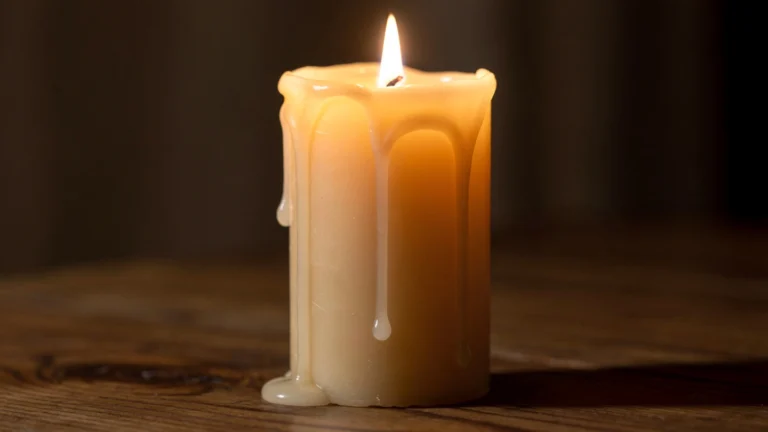
The short answer is: candle wax does not evaporate in the same way that water does. Instead, it melts, travels up the wick, and turns into vapor that burns as a gas. The wax you see disappearing is actually being transformed through a chemical process.
Understanding how candle wax works can help you burn candles more efficiently, reduce waste, and appreciate the science behind this simple household item.
Does Candle Wax Evaporate?
Technically, candle wax can evaporate slightly when exposed to heat, but it does not evaporate easily under normal conditions.
⚡ Short Answer: Wax doesn’t evaporate like water — it melts, travels up the wick, and burns as vapor (combustion).
Unlike water, which turns into vapor at relatively low temperatures, candle wax has large molecules that require much more energy to become a gas.
When a candle is sitting unused, the wax remains solid. Even in a warm room, it will not noticeably disappear because the evaporation rate is extremely slow.
During burning, however, something different happens. The flame provides enough heat to melt the wax near the wick.
The liquid wax then moves upward through the wick, where the heat converts it into wax vapor. This vapor mixes with oxygen and burns, creating the flame that produces light and heat.
So, instead of simply evaporating, candle wax goes through a process called combustion.
What Happens to Candle Wax When a Candle Burns?
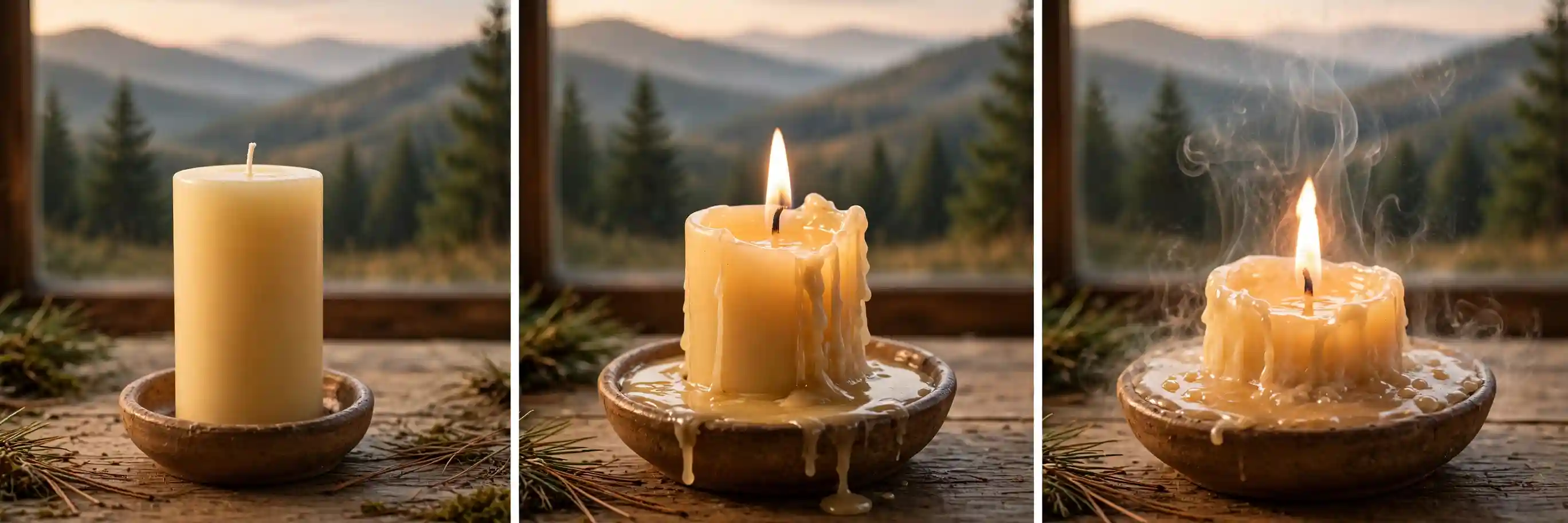
A burning candle goes through several steps:
1. Heat Melts the Wax
When you light a candle, the flame creates heat that melts the wax around the wick. This creates a small pool of liquid wax near the top of the candle.
2. The Wick Absorbs Liquid Wax
The wick works like a tiny fuel delivery system. It absorbs the melted wax through a process called capillary action and carries it upward toward the flame.
3. Wax Turns Into Vapor
As the liquid wax reaches the hot flame, it changes into a gas. The flame does not directly burn the solid wax. Instead, it burns the wax vapor.
4. Wax Vapor Combines With Oxygen
The wax vapor reacts with oxygen in the air. This chemical reaction produces carbon dioxide, water vapor, heat, and light.
This is why a candle slowly gets smaller over time. The wax is not disappearing into the air as solid particles; it is being converted into new substances.
Why Does Candle Wax Seem Like It Disappears?
Many people assume candle wax simply vanishes because they cannot see where it goes. The reason is that most of the wax is transformed into invisible gases.
During complete combustion, candle wax mainly produces:
These gases mix with the surrounding air, making it seem like the wax has disappeared.
However, if a candle does not burn properly, some wax particles may remain. This is why you sometimes see black smoke or soot from a candle flame.
The incomplete burning leaves behind tiny carbon particles instead of fully converting the wax into gases.
Can Candle Wax Evaporate Without Being Lit?
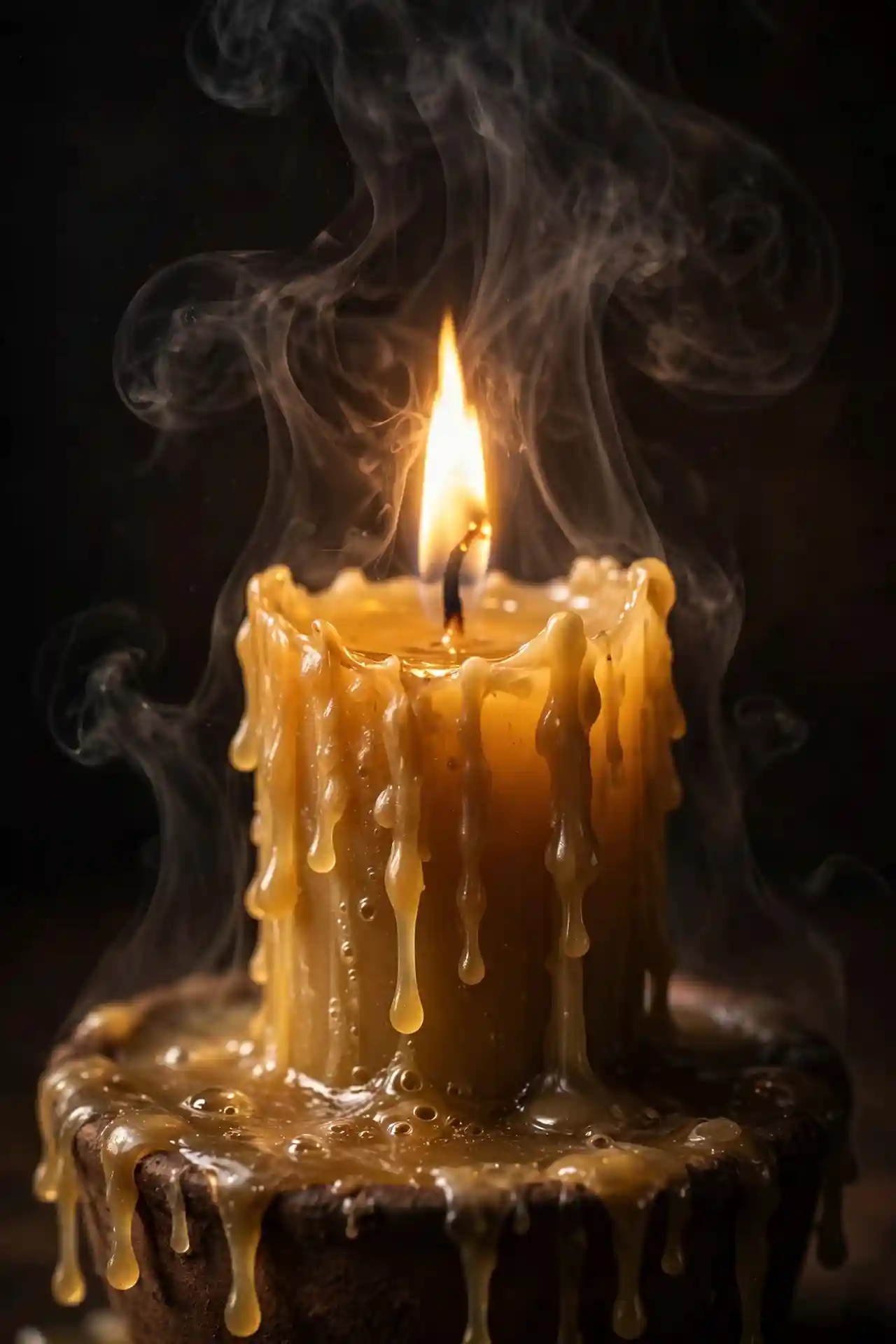
Yes, but only very slowly.
If you leave a candle uncovered for a long period, especially in a hot environment, a small amount of wax may evaporate.
However, the amount is usually so small that you will not notice a significant difference.
Factors that can increase wax evaporation include:
- High temperatures
- Direct sunlight
- Strong heat sources nearby
- Large exposed wax surfaces
For example, a candle left near a sunny window may soften or develop a slight waxy smell because some fragrance oils can evaporate more easily than the wax itself.
Does Candle Fragrance Evaporate Faster Than Wax?
Yes. Many scented candles contain fragrance oils that evaporate more easily than the wax.
Even when a candle is not burning, you may notice its scent becoming weaker over time. This happens because fragrance molecules slowly escape into the air.
When a candle burns, the heat releases these fragrance compounds, creating the aroma people enjoy. Once the fragrance oils are gone, the candle may still burn normally but produce less scent.
This is also why storing candles properly is important. Keeping them covered and away from heat helps preserve their fragrance for longer.
Why Does Melted Wax Not Just Turn Into Liquid and Stay There?
❌ Myth: Melted wax just sits there as liquid.
✅ Fact: The flame continuously pulls wax up as fuel, converting it into vapor as long as it burns.
A common question is why candle wax does not simply remain as melted liquid around the wick.
The reason is that the flame continuously uses the melted wax as fuel. As long as the candle is burning, the wick pulls more wax upward, and the heat converts it into vapor.
The wax pool acts as a fuel reservoir. It slowly supplies the flame with the material needed for combustion.
If the wick is removed or the flame is extinguished, the wax will simply cool and become solid again.
Does Candle Wax Leave Any Residue?
A properly burning candle produces very little waste because most of the wax is converted into gases. However, some residue may remain due to:
- Poor-quality wax
- An oversized wick
- Limited oxygen supply
- Drafty conditions
- Improper candle burning habits
Common leftovers include:
- Soot on glass containers
- Small amounts of unburned wax
- Carbon deposits around the wick
Using the correct wick size and trimming the wick before each burn can help create a cleaner flame.
How to Make Candle Wax Last Longer
✅ 4 Habits for Longer-Lasting Candles
✂️ Trim wick to ¼ inch
🕯️ Allow a full melt pool first burn
🌬️ Keep away from airflow
📦 Store cool, dry, and dark
If you want your candles to burn longer and more efficiently, follow these simple tips:
Trim the Wick Regularly
A wick that is too long creates a larger flame and burns wax faster. Keep the wick trimmed to about ¼ inch before lighting.
Allow a Full Melt Pool
During the first burn, let the wax melt across the entire surface. This helps prevent tunneling, where wax remains unused around the edges.
Keep Candles Away From Airflow
Fans, open windows, and air conditioners can cause uneven burning and make candles burn faster.
Store Candles Properly
Keep candles in a cool, dry place away from direct sunlight. This protects the wax and preserves fragrance.
Final Thoughts
So, can candle wax evaporate? The answer is yes, but not in the way most people imagine. Candle wax does not simply disappear into the air like water.
Instead, when a candle burns, the wax melts, travels through the wick, becomes vapor, and undergoes combustion.
The beautiful glow of a candle is actually the result of a fascinating transformation where solid wax becomes energy, light, and invisible gases.
Understanding this process makes candle burning even more interesting and helps you use your candles in a smarter and more efficient way.