How to Make Bracelets That Look Store-Bought (But Cost Almost Nothing?)

Bracelets are one of the few crafts where the learning curve and the reward are nearly the same size — an hour of practice produces something wearable.
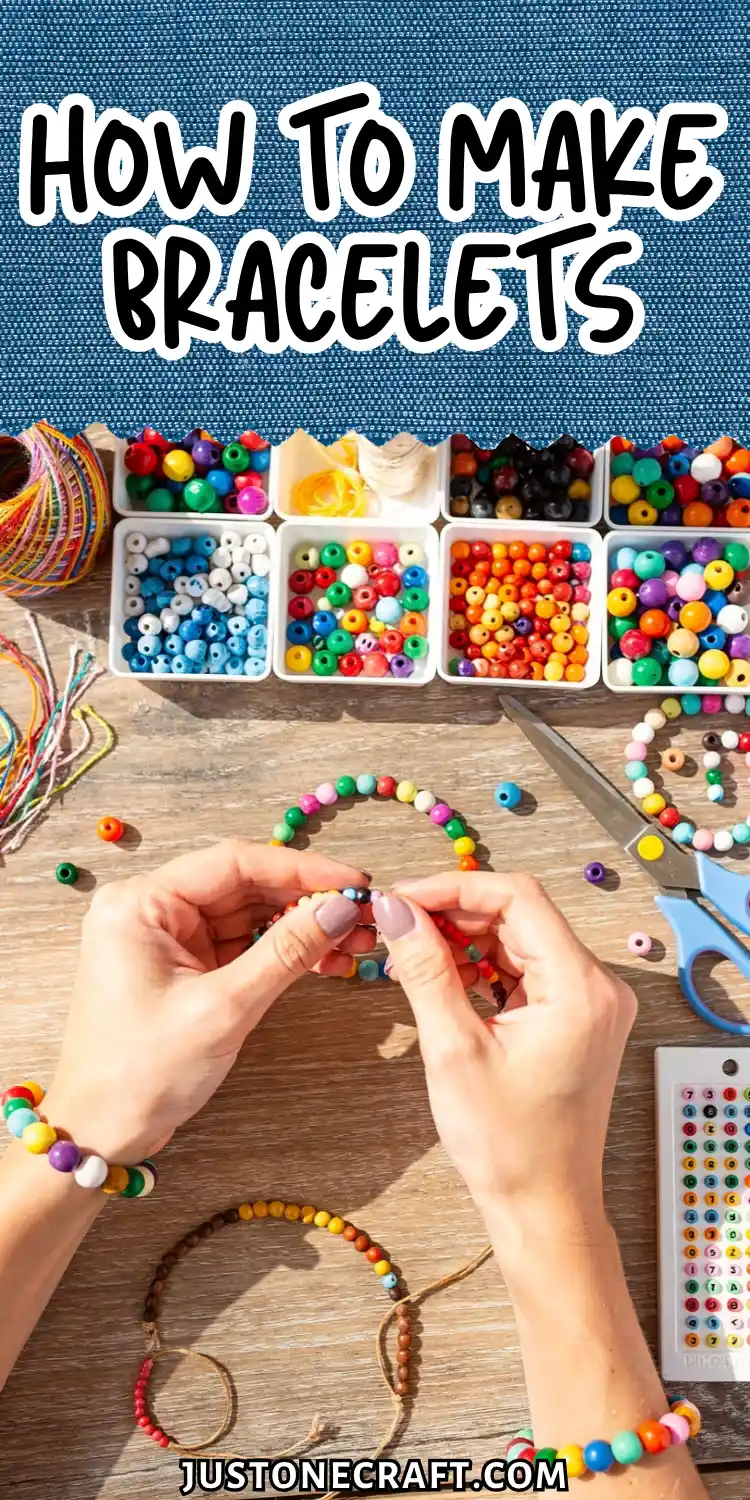
Whether you’re working with thread, beads, or cord, the core skill is tension management: keeping consistent pull on your material so the finished piece holds its shape without cutting off circulation or falling apart.
Why Bracelet-Making Actually Works
Every bracelet is a tension structure — the knots, weaves, or string passes grip each other through friction alone.
Pull each one with consistent force and the wear distributes evenly across the whole piece. Lose consistency at even one point and that’s where it breaks.
For beaded bracelets, the stringing material is the spine. Elastic distributes tension along its full length; wire and thread push all that load onto the end knots or crimps — which is exactly why those spots need the most care.
What You Need
For a basic beaded elastic bracelet (the best starting point):
- 0.7mm clear stretch elastic cord — not 0.5mm (too thin, snaps easily) and not 1mm (won’t fit through most bead holes). Beadalon and Stretch Magic are reliable brands. Generic craft store elastic often degrades within weeks.
- Seed beads or 8mm round beads — for a standard 7-inch wrist, 8mm beads give you roughly 22 beads per bracelet. Acrylic beads work fine for practice; glass or natural stone add weight and durability.
- Big-eye needle or twisted wire needle — the eye collapses to thread through tight bead holes. A regular sewing needle usually won’t fit.
- Scissors — small, sharp ones. Craft scissors leave frayed elastic ends that won’t knot cleanly.
- Tape or a bead stopper — clips to one end of your elastic to stop beads sliding off while you work. People skip this constantly and spend 10 minutes chasing rolling beads.
- Clear nail polish or G-S Hypo Cement — seals the finished knot so it doesn’t slip. Do not skip this. A surgeon’s knot alone will eventually work loose on stretch elastic.
Step-By-Step Instructions
1. Cut 12 inches of elastic cord. This gives you roughly 5 inches of working length for a 7-inch bracelet, with enough tail on each end to tie a secure knot. If your wrist is larger than 7.5 inches, cut 14 inches.
2. Clip your bead stopper or fold a small piece of tape around one end. Leave about 1.5 inches of tail beyond the stopper. You’ll feel resistance if you accidentally pull a bead toward this end — that’s your confirmation it’s working.
3. Thread your needle and string your beads. Push the needle through each bead and slide it down to the stopper. For 8mm beads on a 7-inch wrist, string 22 beads — don’t measure to 7 inches at rest, the elastic will feel too tight when worn.
4. Remove the bead stopper and bring both ends together. Hold the strand in a circle. The two tails should meet with about 1.5 inches on each side. At this point you should see the beads sitting evenly spaced and the elastic forming a smooth curve — not bunching or twisting.
5. Tie a surgeon’s knot. Cross right over left and pull through twice before tightening. Pull both tails outward evenly — uneven tension torques the knot and weakens it.
6. Apply a small drop of G-S Hypo Cement or clear nail polish to the knot. Let it dry for 60 seconds before handling. The glue wicks into the knot and locks the fibers. Without it, the knot will migrate and eventually slip through the bead holes.
7. Trim the tails to 2–3mm. Don’t cut flush to the knot — leave a small stub so the sealed knot has material to grip. Tuck the stubs inside an adjacent bead hole if possible.
Storage and Care
Keep finished bracelets flat or loosely looped — don’t hang them on hooks under tension for long periods, as this permanently stretches elastic.
Store beaded pieces away from direct sunlight if you’re using dyed beads or natural stones (turquoise and dyed howlite fade noticeably). Wipe stone or glass beads with a dry cloth, not water, to preserve any surface finish.
Variations
Macramé cord bracelet — swap elastic for 1mm waxed cotton cord and use square knots instead of stringing. The knotting structure makes it adjustable, so sizing is less critical. Takes longer (30–45 minutes vs. 10), but produces a more textured, bohemian result.
Loom bracelet — uses a small plastic bead loom to hold warp threads taut while you weave beads across them row by row. The grid structure allows patterns and text. Requires more setup but the technique is highly repeatable once learned.
Stackable chain bracelet — uses jewelry wire, jump rings, and a lobster claw clasp instead of elastic. Better for heavy pendants or charms because the rigid clasp carries the load instead of a knot. Requires flat-nose pliers to open and close jump rings properly.
Troubleshooting
| Problem | Likely cause | Fix |
|---|---|---|
| Beads bunching together | Elastic too tight at rest | Restring with 1–2 fewer beads |
| Bracelet too loose | Elastic stretched before knotting | Always knot with elastic at natural (un-stretched) length |
| Knot slipping through bead hole | No sealant applied, or knot too small | Re-tie surgeon’s knot and apply G-S Hypo Cement |
| Elastic snapping at knot | Cord too thin or over-pulled during knotting | Use 0.7mm cord; pull tails evenly when seating knot |
| Beads cracking or chipping | Acrylic beads under stone or metal bead weight | Separate heavy beads with seed beads as buffers |
| Bracelet twists on wrist | Beads strung in inconsistent orientation | Check that any faceted or shaped beads all face the same direction before knotting |
One Thing to Keep in Mind
The skill that transfers across every bracelet style — elastic, macramé, wire, loom — is learning what “correct tension” feels like in your hands.
Once you’ve made three or four bracelets and have felt the difference between a loose knot and a properly seated one, you’ll stop following instructions step-by-step and start diagnosing problems in real time.
That’s the actual milestone. The first bracelet teaches you the technique; the fourth one teaches you the feel.