19 Fall Wreath Ideas You Can Make in an Hour

Your front door sets the tone before anyone even knocks.
Fall decorating starts at the door, and a wreath is the fastest way to make an entrance feel finished.
Whether you want lush roses spilling over a black door or a sparse, foraged look with dried leaves and lace, there’s a version here for every style and budget.
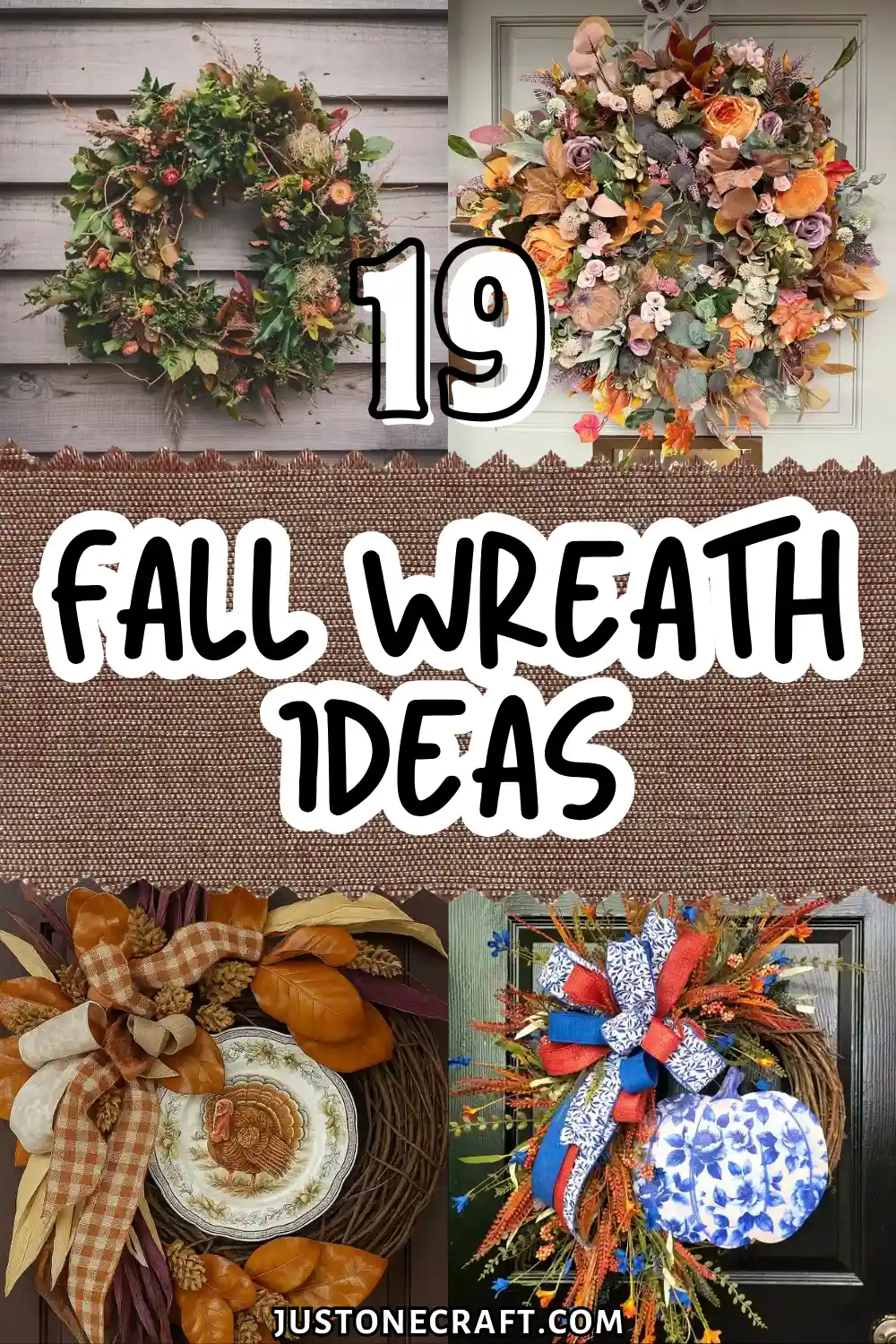
From dried citrus wreaths you can actually smell to painted pumpkin cutouts and moody half-moon shapes, these 19 fall wreath ideas cover every mood autumn brings. Pick your favorite, or mix a few together.
1. A Front Door Fall Wreath That Doubles As A Statement Piece

Coral roses, orange peonies, and tiny faux pumpkins pile onto this wreath in a way that reads more like a bouquet than a typical door decoration.
What makes it work is the color repetition: the same warm pink and orange tones show up again in the two flanking porch arrangements, so the whole entryway feels planned instead of thrown together.
Best for: entryways with room for scale, since this look leans big and full rather than dainty.
- Pick two or three flower types max so the color story stays clean
- Tuck small pumpkins into the gaps between blooms for texture
- Repeat the same flowers in a porch urn or planter to tie the space together
2. Deck A Door In Apples And Mums For An Orchard Feel
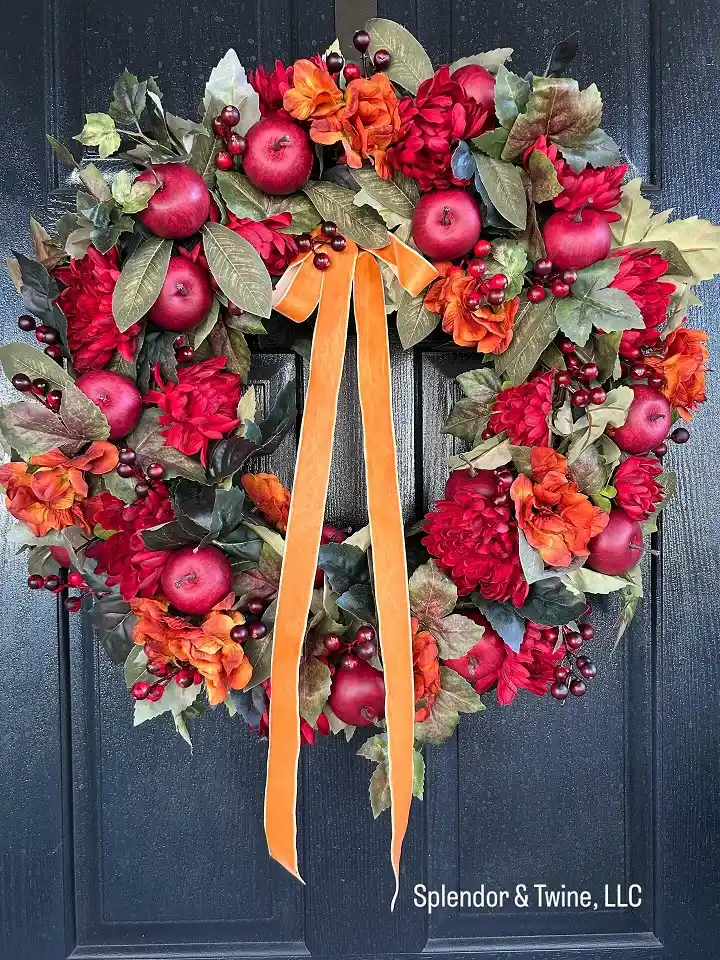
Real fruit, or faux fruit that looks close to it, gives a wreath a completely different personality than flowers alone.
Here, deep red apples nestle between crimson mums and burnt orange blooms, all held together with sage green leaves.
A single long velvet ribbon in a lighter orange hangs down the center, breaking up all that saturated color with something soft.
Good To Know: fruit accents like apples or pears tend to look best clustered rather than spread evenly, since clusters mimic how fruit actually grows on a branch.
Recreate this look
3. Let The Bow Steal The Show On A Bright Fall Wreath
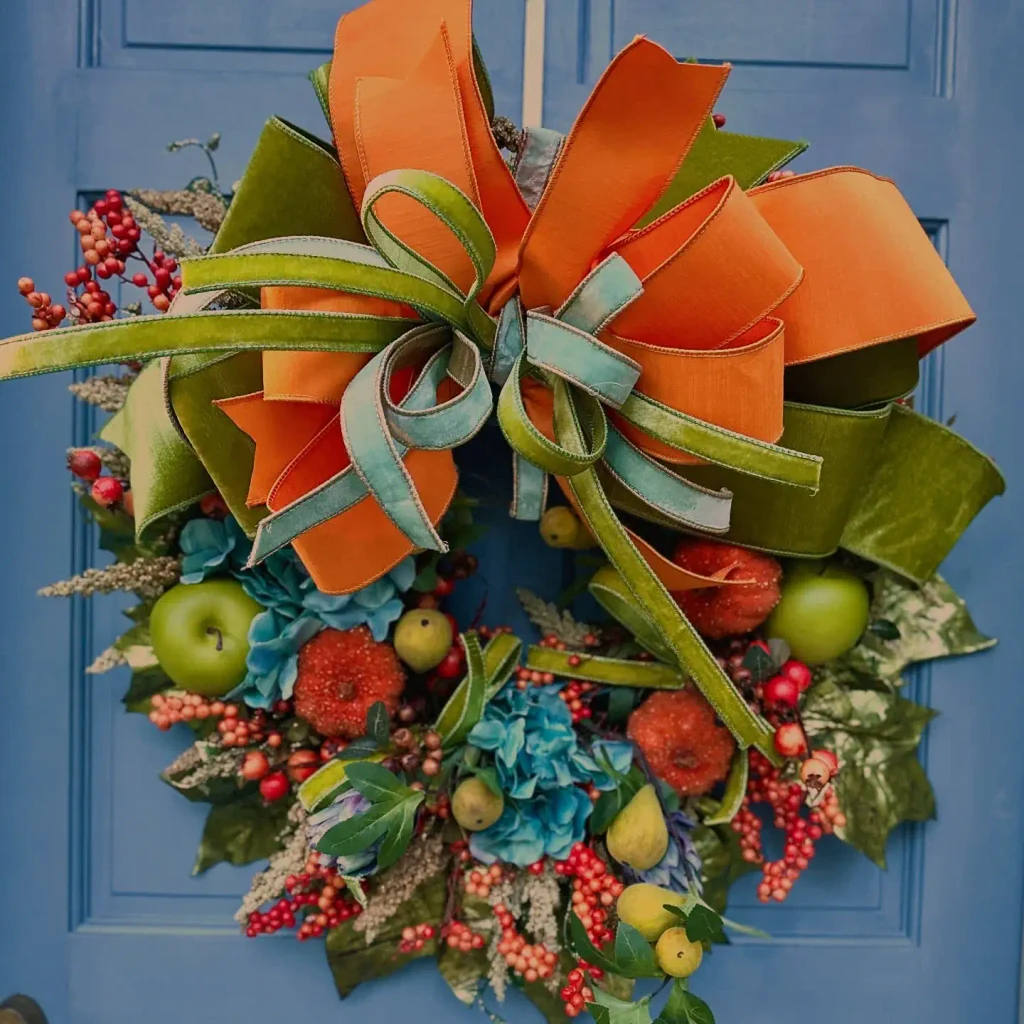
This one flips the usual formula. Instead of flowers dominating and a ribbon tucked in as an afterthought, a giant layered bow in orange, olive, and sky blue velvet sits front and center, with the wreath base almost acting as a frame.
Green apples, blue hydrangea, and little glittered pumpkins fill in below it against a soft blue door.
The trick is unexpected color pairing. Blue and orange sit opposite each other, so putting them together in ribbon form makes the whole wreath pop instead of blend into the door.
An oversized bow in contrasting velvet ribbon can carry a whole wreath, letting the florals play a supporting role instead of the main event.
4. A Half Moon Wreath Shape Feels Less Fussy
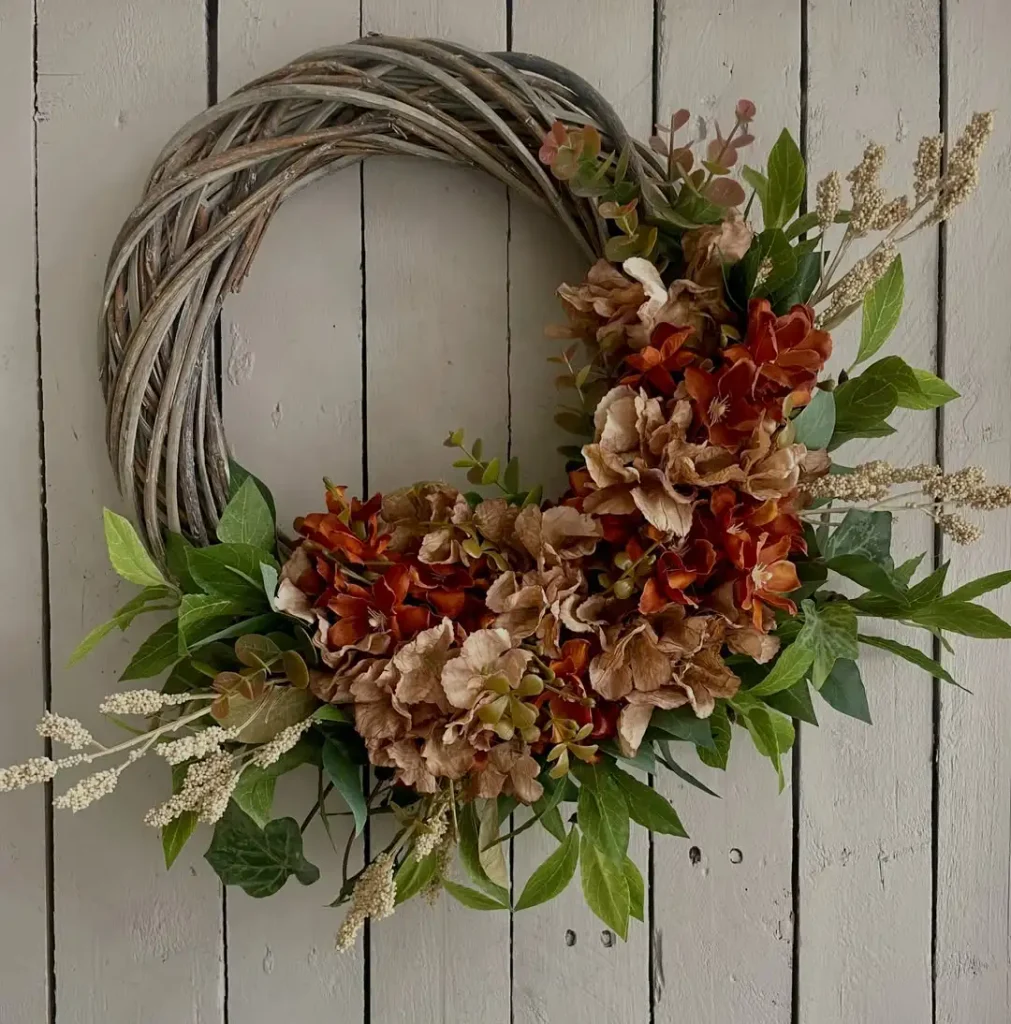
Not every fall wreath needs flowers packed around the whole ring. This grapevine base leaves most of the circle bare and lets a cluster of rust hydrangea and dried blush blooms sit off to one side, balanced by wispy grass plumes reaching the opposite direction.
It reads more relaxed than a fully covered wreath, and it costs less florals to build too.
Watch Out: if you go this route, weight the arrangement toward one side on purpose. A half-hearted attempt at asymmetry, where the florals sit almost centered, just looks unfinished instead of intentional.
⚠️ Watch Out
Commit fully to one side. A grapevine wreath left mostly bare only works when the floral cluster looks deliberately weighted, not centered.
5. Skip Store Bought Flowers And Forage For A Wreath Instead
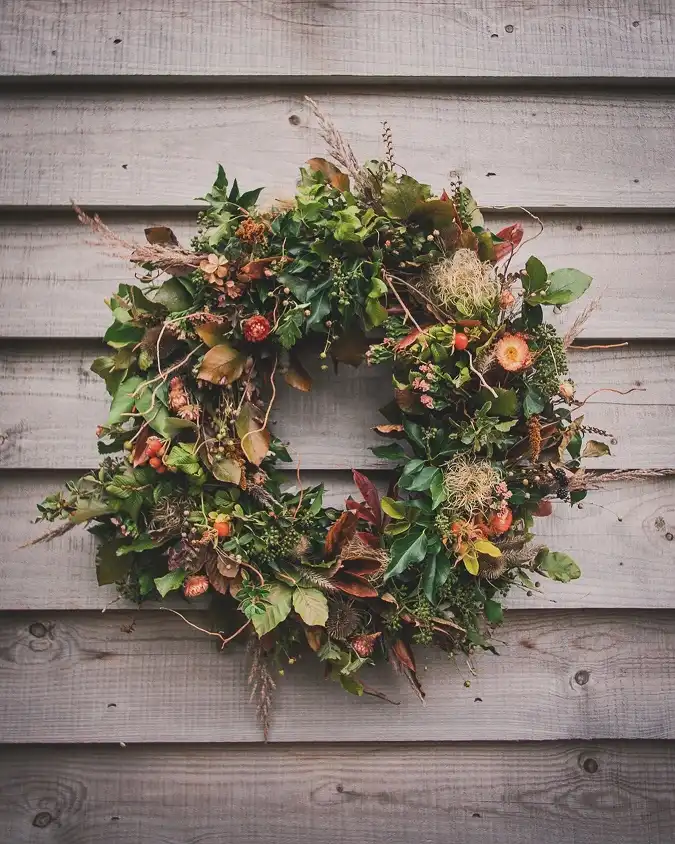
Nothing here looks purchased from a craft aisle. Ivy, seed pods, dried grasses, and small rose hips tangle together in shades of deep green and rust, with a few curling vine tendrils left loose on purpose.
It has an unpolished, gathered look that fits a rustic wood plank wall far better than anything glossy would.
6. Mix Dusty Pinks With Rust For A Softer Fall Palette
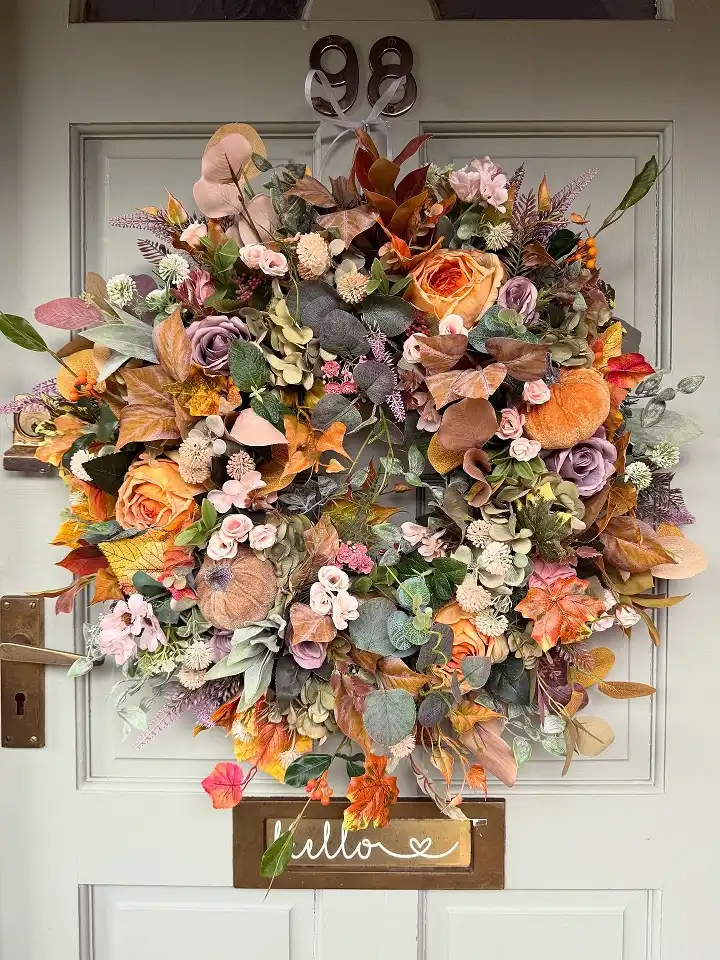
Sage door, brass number plate, and a wreath that leans lavender and blush instead of the usual orange overload.
Velvet mushrooms, muted roses, and eucalyptus in dusty tones give this one a garden party feeling more than a harvest one.
A tiny “hello” plaque tucked under the mail slot adds a friendly, lived in touch.
Start with a base of sage eucalyptus and muted greenery.
Add lavender and mauve roses instead of the usual bright orange.
Finish with a few rust leaves so it still says fall.
7. Try A Moss Base For Texture Before You Even Add Flowers
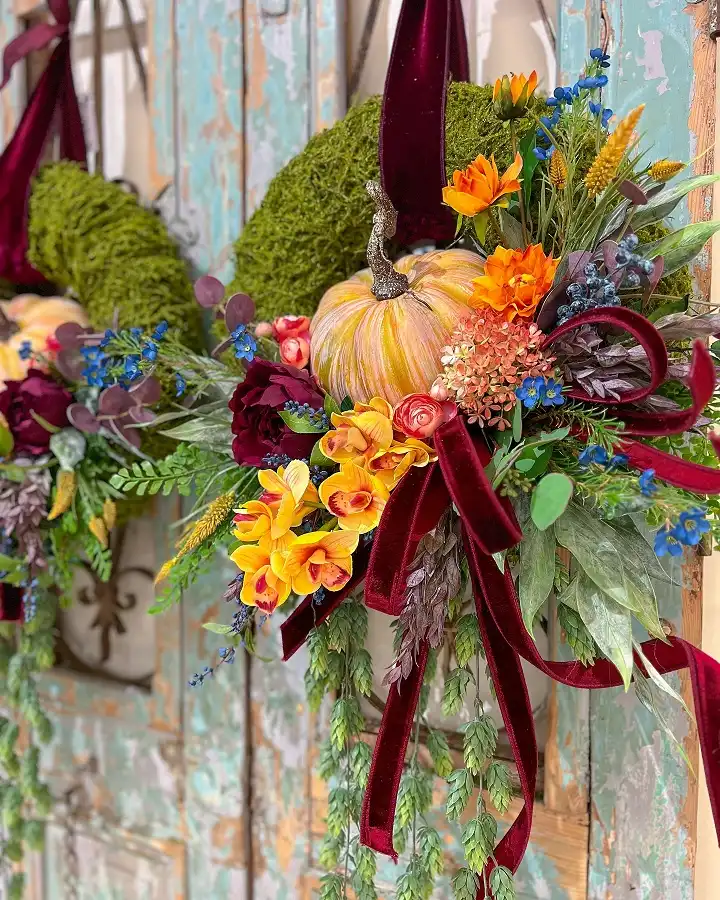
Look past the florals for a second and notice the wreath form itself, covered edge to edge in green moss instead of grapevine or straw.
It gives the whole piece a plush, almost velvety base that peeks through between the orchids, roses, and a hand painted pumpkin.
Burgundy velvet ribbon streams down in loose loops rather than a tight bow.
8. Go Fully Dried For A Wreath That Lasts All Season
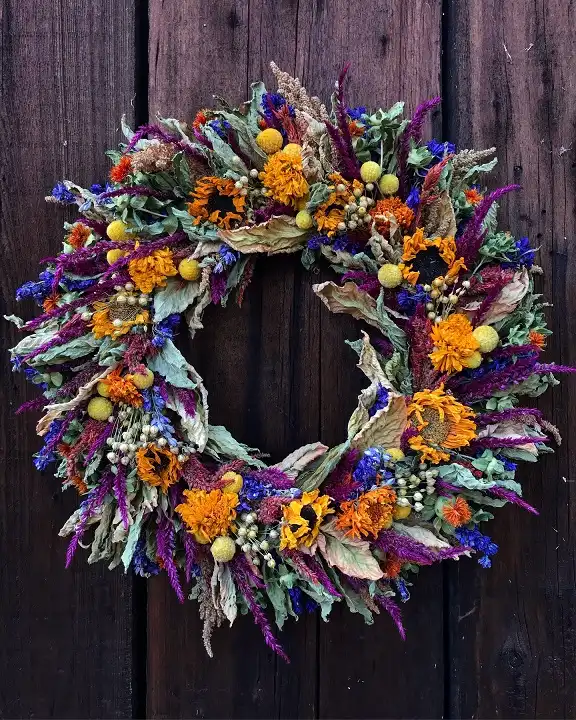
Sunflowers, statice, and yellow billy balls, all air dried, crowd this wreath in colors so saturated it almost looks fresh from a distance.
Nothing here will wilt or brown out over the next two months, which is the real advantage of building with dried stems from the start instead of switching materials partway through fall.
| Fresh Flowers | Dried Flowers |
|---|---|
| Needs replacing every few weeks | Lasts the whole season outdoors |
| Bright but short lived color | Rich, muted color that holds |
9. Layer Gold Foliage Into A Jewel Toned Wreath For Extra Shine
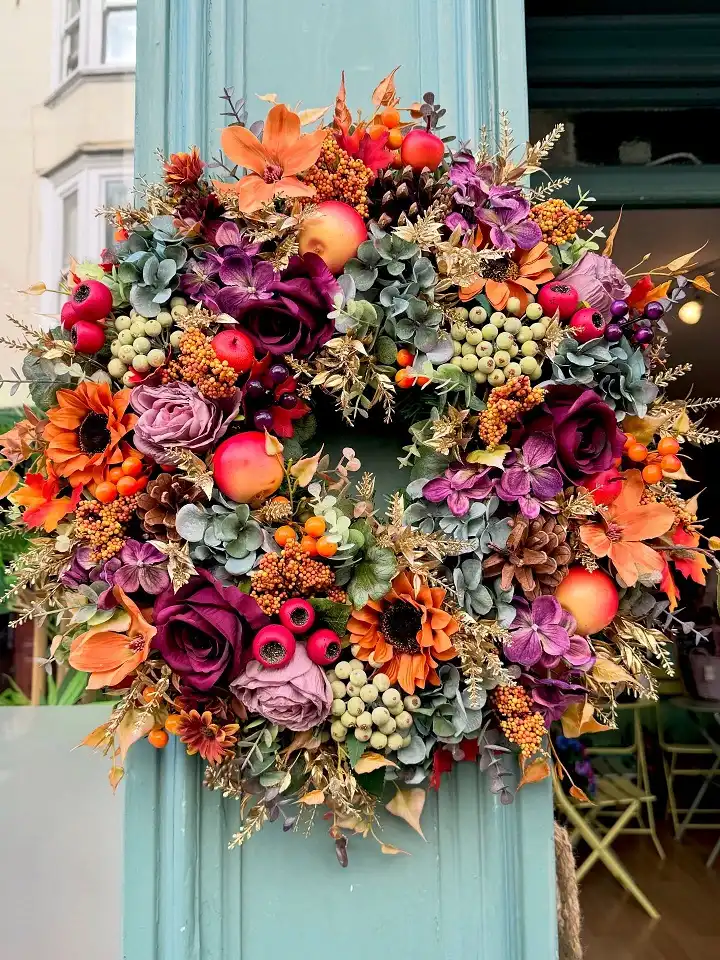
Plum roses, sunflowers, and pomegranate red berries already make a strong combination, but the sprigs of gold painted foliage tucked throughout are what give this wreath its glow against a teal shop door.
Pinecones and eucalyptus keep it grounded so the gold doesn’t tip the whole thing into looking like a Christmas piece too early.
Quick Tip: gold accents work best as an accent, not a base. A little goes a long way before a fall wreath starts reading like a winter one.
💡 Quick Tip
Use gold painted foliage sparingly. Too much and a fall wreath starts to look like it belongs on a Christmas door instead.
10. Bring In Chinoiserie Pattern With A Painted Pumpkin Cutout
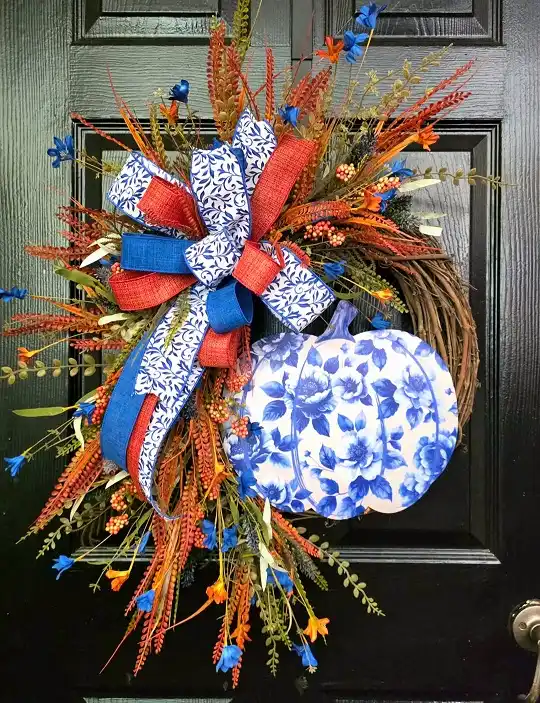
A flat wooden pumpkin cutout, hand painted in a blue and white floral pattern, sits at the base of this wreath instead of the usual dimensional gourd.
Orange and blue wildflowers spray out from a grapevine base, and the bow ribbon repeats that same blue and white pattern, tying the whole thing together with a china plate kind of elegance.
- One flat painted pumpkin cutout as the anchor piece
- Wispy orange and blue wildflower stems for movement
- Patterned ribbon that matches the pumpkin design, not just the color
11. Center A Vintage Style Plate Instead Of A Focal Flower
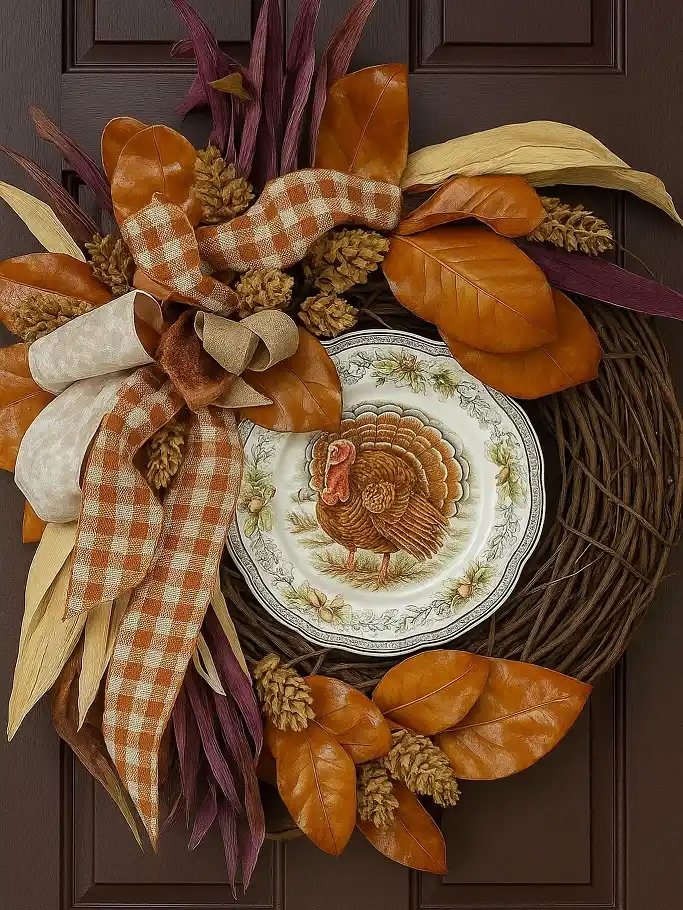
A turkey printed plate sits right in the middle of this grapevine wreath, surrounded by magnolia leaves and dried corn husks instead of the usual flower cluster.
It leans into Thanksgiving specifically rather than fall in general, and the plaid and checked ribbons in warm tan tones keep it from feeling like a kitchen decoration hung on a door by mistake.
Watch Out: a printed plate needs enough surrounding texture to feel intentional. Too little greenery around it and the plate can look randomly stuck on rather than the focal point.
⚠️ Watch Out
Give a printed plate plenty of surrounding foliage. Without it, the plate reads as randomly attached instead of the wreath’s centerpiece.
12. A Neutral White Pumpkin Wreath Works On Nearly Any Door Color
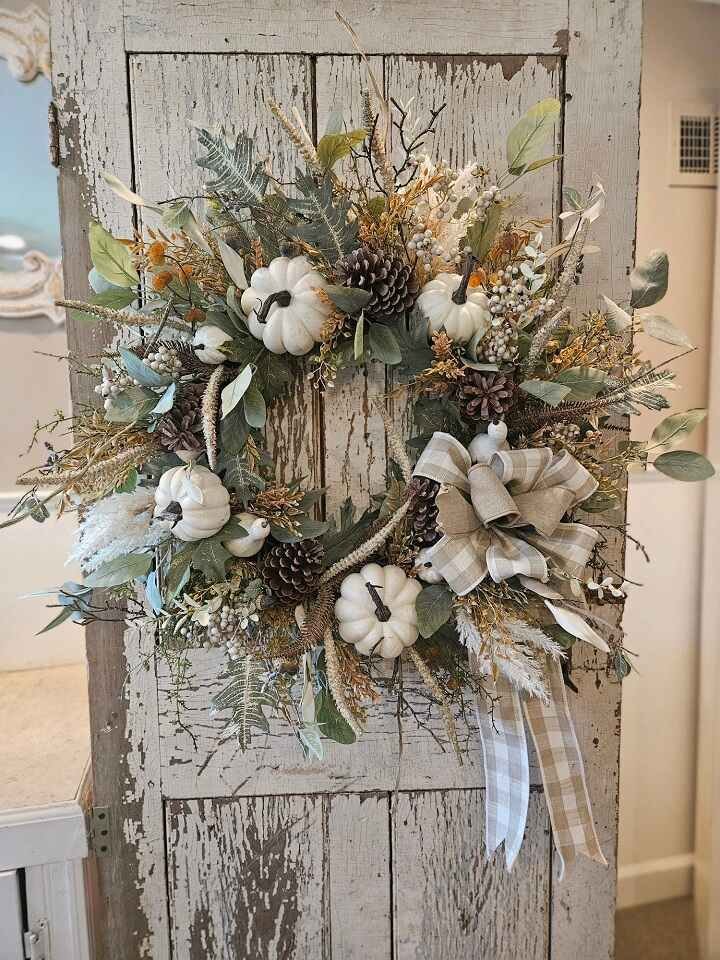
Sage greenery, dusty white pumpkins, and pinecones make up this wreath, with a soft plaid bow in beige and cream instead of the usual orange.
Because nothing here fights for attention with a bold color, it can sit on a weathered white door, a bright front door, or anywhere in between without clashing.
What works here
Plaid bows tend to look their best oversized and slightly loose, not tightly looped. This one has that relaxed, layered shape, which softens what could otherwise be a fairly formal color palette.
Let the plaid bow sit loose and layered.
Cluster white pumpkins in twos or threes.
Tying the bow too tight and small.
Scattering pumpkins evenly with no clusters.
13. When In Doubt, Let Greenery Carry The Whole Wreath
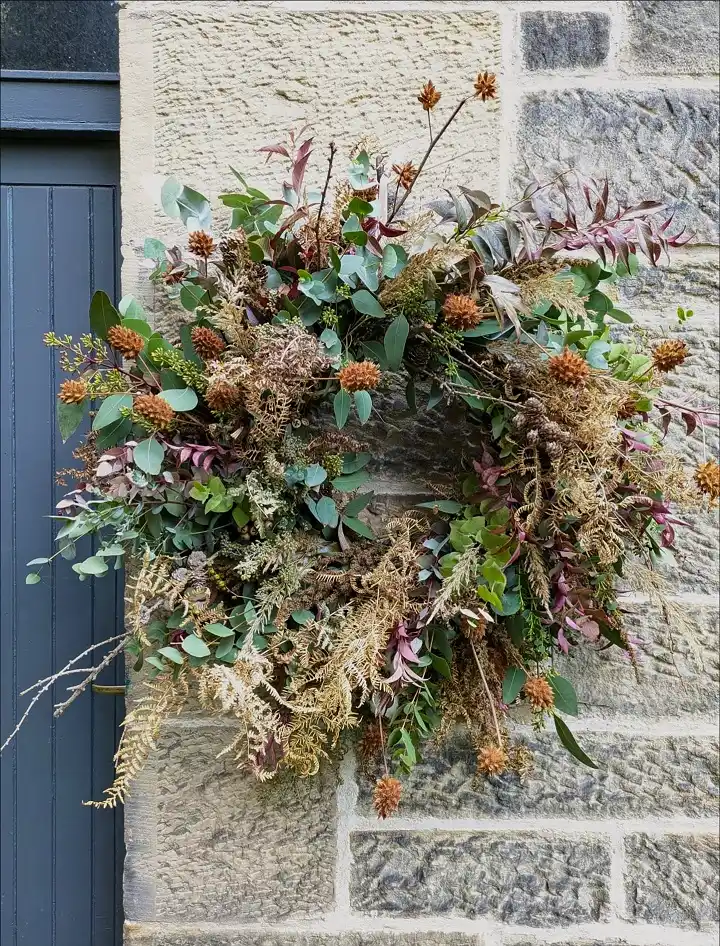
No bold flowers here at all, just eucalyptus, ferns, and rust colored seed pods layered against stone.
It proves a wreath doesn’t need a big statement bloom to hold visual interest.
The variety of leaf shapes and the mix of fresh green with dried, curling bits does the job instead.
Best for: doors with busy or textured backgrounds, like stone or brick, where a flower heavy wreath might compete rather than complement.
Mixed leaf shapes and textures can carry a wreath on their own, especially against a busy backdrop like stone or brick where big flowers would compete.
14. Combine Peonies, Ranunculus, And Pumpkins For A Full Garden Look
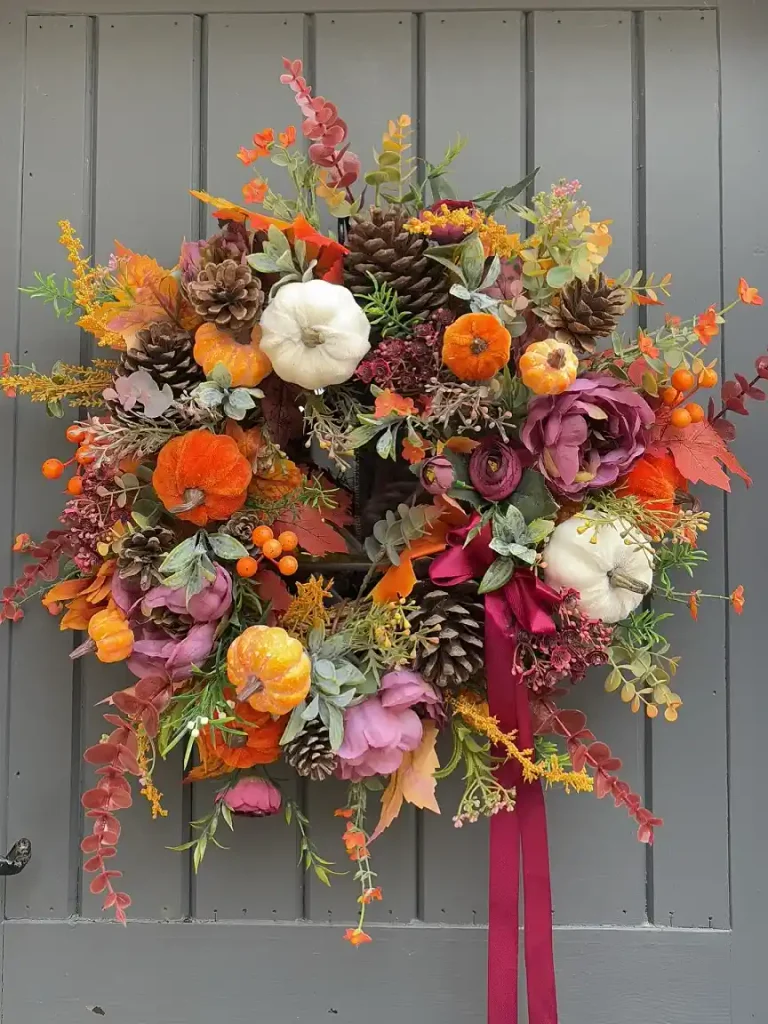
Mauve peonies and burgundy ranunculus fill nearly every gap in this wreath, with orange and white pumpkins scattered through like they grew there naturally.
Pinecones add weight at the top and bottom, and a single wine colored ribbon drops long down the front, giving the eye somewhere to land after taking in all that floral detail.
Build the base with peonies and ranunculus in related tones.
Nestle small pumpkins into the gaps, not on top of the flowers.
Add one long ribbon tail rather than a full bow.
15. A Sparse Wreath With Lace Details Leans Moody On Purpose
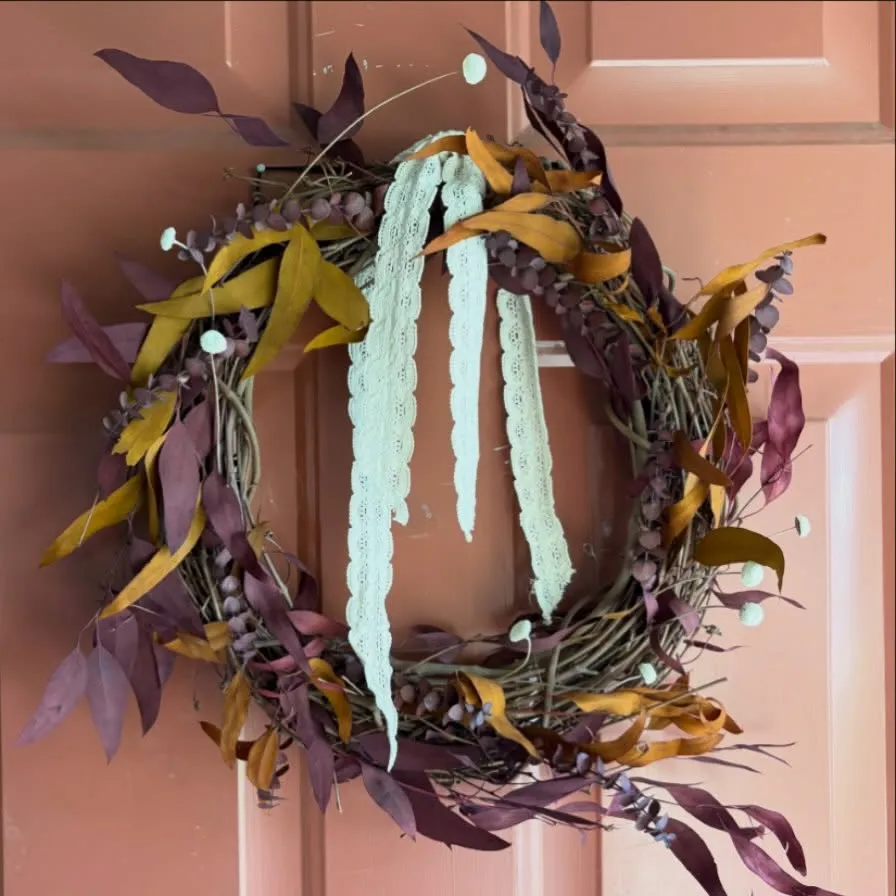
Purple and mustard leaves scatter thinly around a mostly bare grapevine base, while pale lace ribbon tails drape down the middle like something a little ghostly.
This isn’t a full, lush wreath, and it isn’t trying to be. Against a dusty pink door it reads more like early autumn twilight than harvest festival.
Effort: minimal, since the base stays sparse
Style: moody and pared back
Best for: porches leaning into a softer, less traditional fall look
16. Add Dried Citrus And Cinnamon Sticks For A Wreath You Can Smell Too
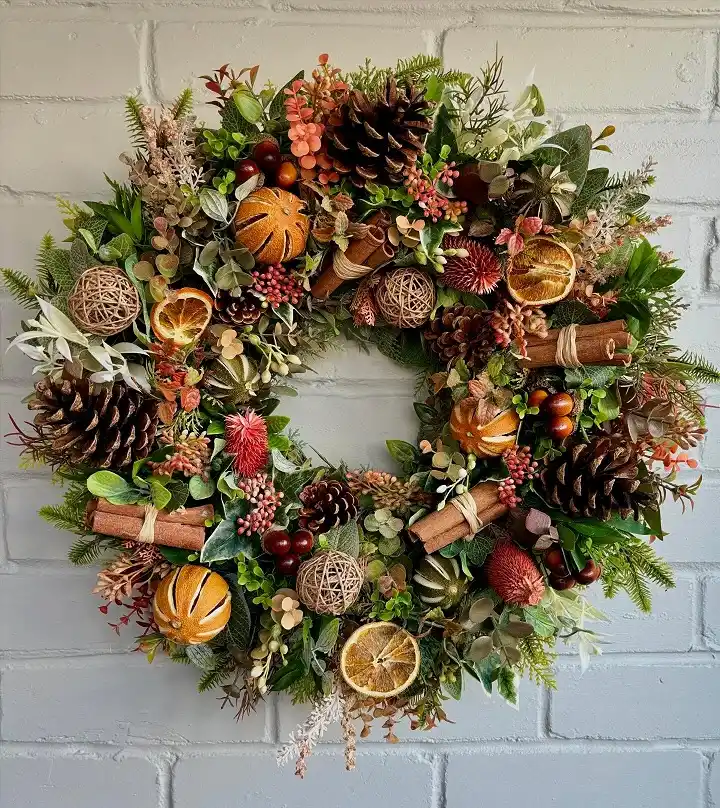
Sliced dried oranges and bundled cinnamon sticks tuck between deep evergreen and berries on this wreath, giving it a warm, spiced quality that photos can’t fully capture.
Pinecones and small woven twine balls fill out the texture, and the whole thing leans more toward a winter hosting piece that still fits comfortably within fall.
| Standard Wreath | Citrus & Spice Wreath |
|---|---|
| Visual interest only | Visual interest plus scent |
| Works for fall alone | Transitions naturally into the holidays |
17. Pair Burlap With Cream Dahlias For A Cozy, Homespun Wreath
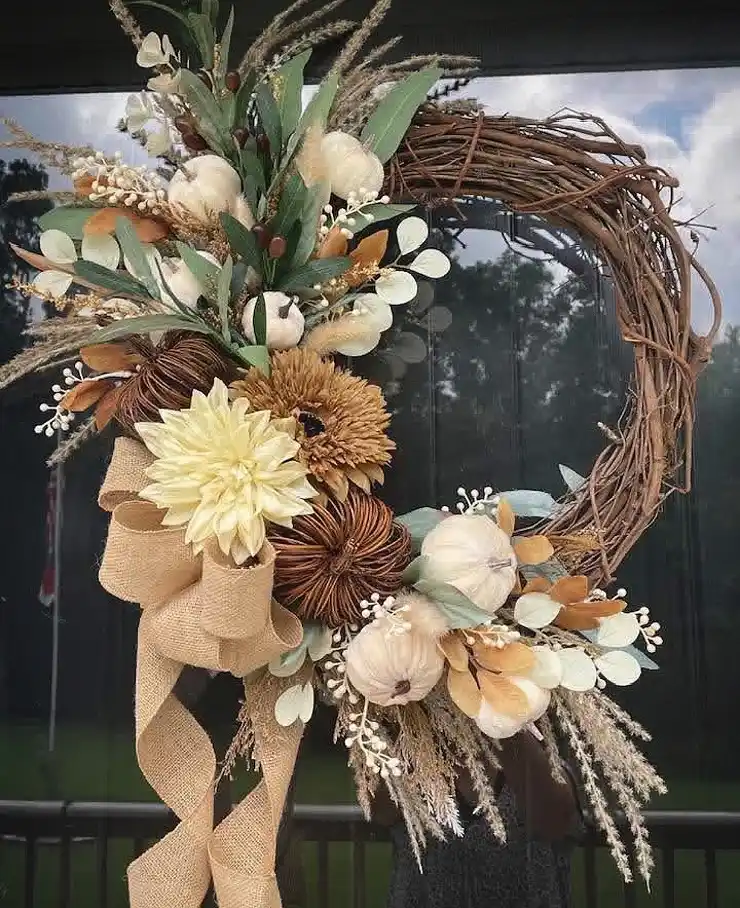
Grapevine forms the base again here, but the color story shifts toward cream and toasted brown, with a pale yellow dahlia and rust colored dried sunflowers as the standouts.
A wide burlap bow trails almost to the bottom of the wreath, giving it that homemade, county fair kind of warmth rather than a polished florist look.
- A cream or pale yellow dahlia as the one bold bloom
- Rust toned dried sunflowers or strawflowers for texture
- A generously sized burlap bow with long, loose tails
18. Build A Fully Dried Wreath With Acorns For Extra Detail
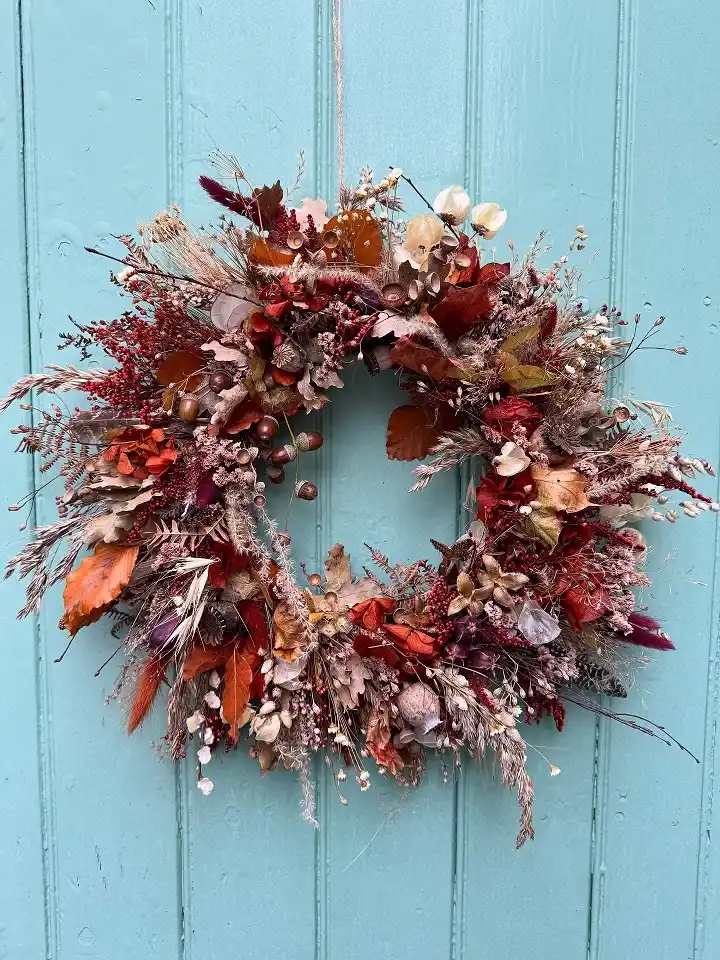
Rust, burgundy, and cream dried leaves pack this wreath edge to edge, but the small acorns tucked throughout are what reward a closer look.
Against a bright teal door, the muted, papery texture of everything dried creates real contrast with the paint color instead of blending into it.
Quick Tip: acorns and small seed pods are inexpensive ways to add detail to a mostly leaf based wreath without buying more flowers.
💡 Quick Tip
Small acorns and seed pods add detail to a dried leaf wreath without needing to buy more flowers.
19. Round Out The List With A Classic Rose And Pumpkin Wreath
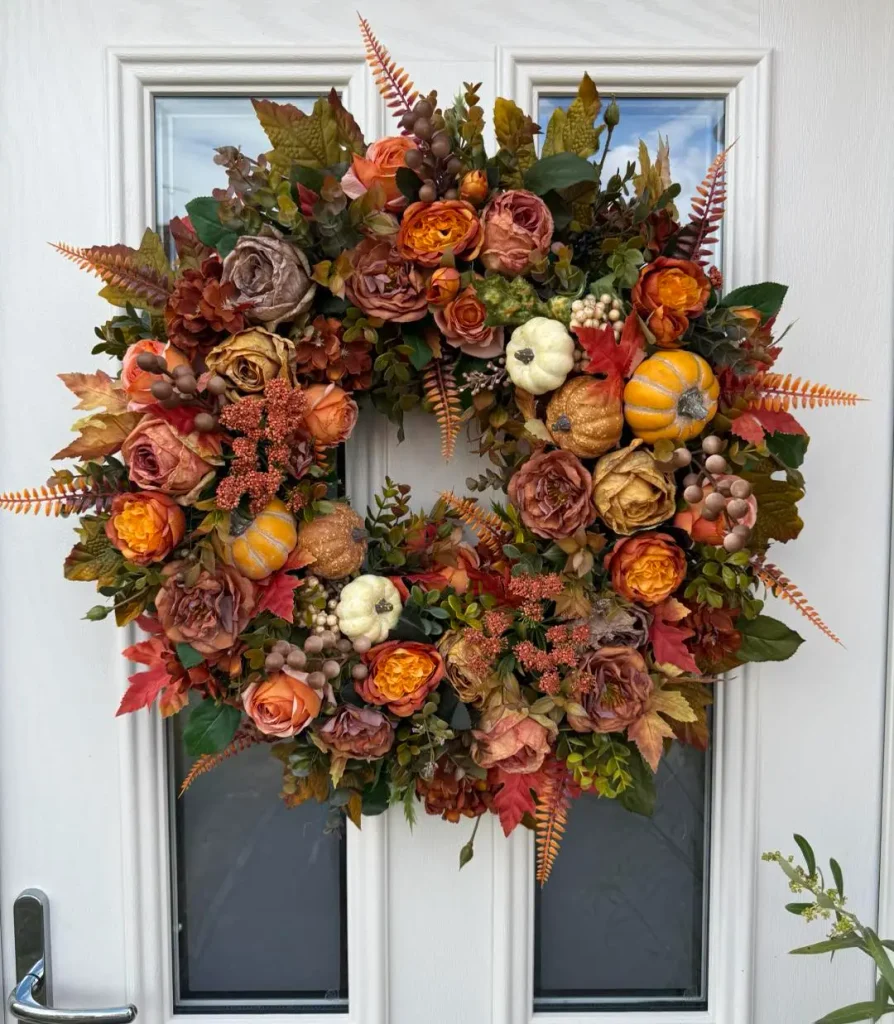
Peach, rust, and dusty mauve roses fill this wreath almost completely, with just enough orange fern fronds and tiny pumpkins peeking through to keep it grounded in fall rather than looking like a wedding piece. It is dense and full in a way that suits a plain white door needing a bit of drama.
What works here
The rose colors here aren’t matched, they’re graduated, moving from peach to rust to mauve. That gradual shift is what keeps a rose heavy wreath from looking flat or one note.