What’s the Easiest Craft to Learn as a Complete Beginner?

If you’ve ever scrolled through Pinterest or Instagram and felt that little spark of “I want to make something with my hands,” you’re not alone.
Crafting has exploded in popularity, and for good reason—it’s relaxing, rewarding, and gives you something tangible to show for your time.
But if you’ve never picked up a needle, a paintbrush, or a glue gun in your life, the sheer number of options can feel overwhelming. Where do you even start?
The good news is that some crafts are far more forgiving than others. After looking at cost, learning curve, and how quickly you can see results, one craft consistently comes out on top for beginners: paper crafting, with a special nod to card making and simple origami.
But let’s break down why this wins, along with a few close runners-up, so you can decide what fits your personality best.
Why Paper Crafting Tops the List
🏆 TOP PICK
Paper Crafting
Cheapest, fastest, most forgiving entry point
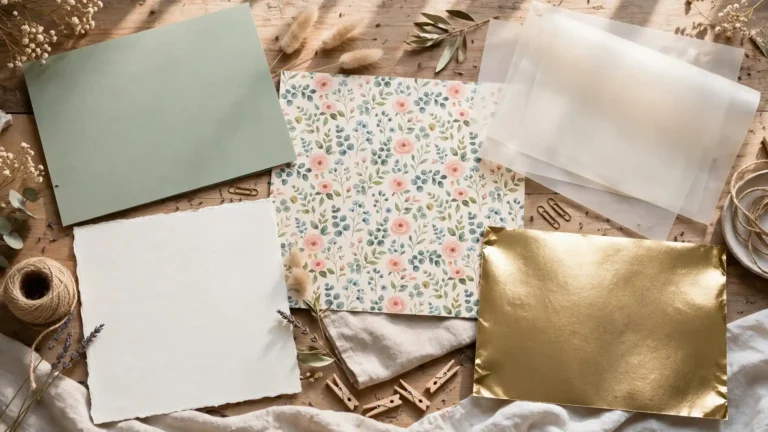
Paper crafting includes everything from greeting card design to scrapbooking to origami. Here’s why it’s the gentlest entry point into the crafting world.
💵 Cheap to start
🗑️ Mistakes cost nothing
⚡ Instant results
📺 Endless tutorials
It’s cheap to start. You genuinely only need paper, scissors, and glue to begin. A pack of colored cardstock costs a few dollars, and you probably already own scissors.
Compare that to knitting, where needles and quality yarn can add up, or pottery, which often requires a wheel or kiln.
Mistakes cost almost nothing. If you mess up a fold or cut a line crooked, you toss that piece of paper and grab another.
This low-stakes environment means you can experiment freely without the fear of “ruining” an expensive material, which is one of the biggest psychological barriers for beginners in any hobby.
You see results immediately. Fold a paper crane, and in ten minutes you have a finished object. Make a simple card, and within thirty minutes you have something you could actually give to someone.
This instant gratification keeps motivation high, unlike crafts such as embroidery or quilting where a single project might take weeks.
Tutorials are everywhere. Because paper crafting is so widely practiced, YouTube and Pinterest are flooded with beginner-friendly, step-by-step guides.
You’re never more than a quick search away from a video showing exactly how to fold, cut, or fold that “impossible” step.
Runner-Up: Simple Knitting or Crochet
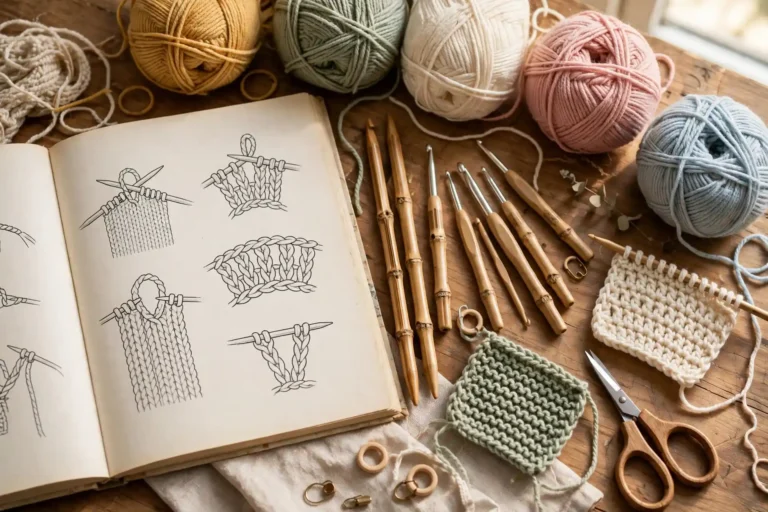
🧶 Crochet/Knit
Wearable results, but a real tension learning curve
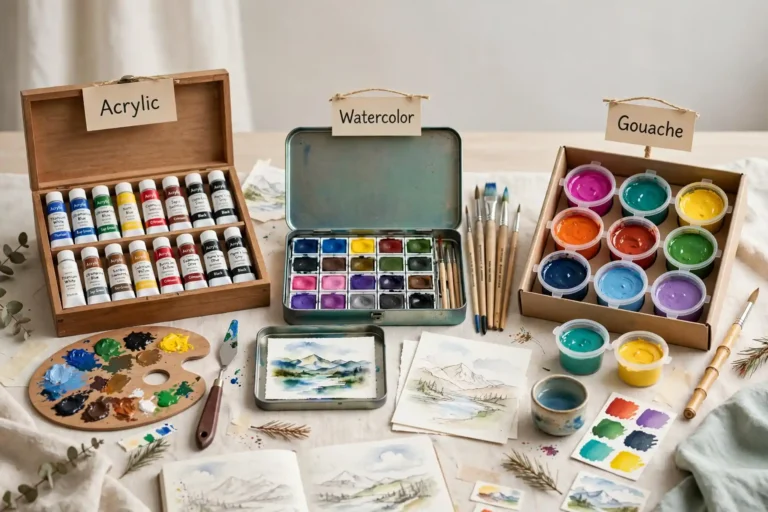
🎨 Acrylic Paint
Dries fast, forgiving of mistakes, no toxic solvents
If paper doesn’t excite you, knitting and crochet deserve mention. Crochet in particular is often considered slightly easier than knitting because you only manage one loop at a time instead of balancing an entire row on two needles.
A beginner can learn to chain and make single crochet stitches within an hour, and a basic dish towel or scarf is a totally achievable first project.
The catch is that both crafts have a real learning curve when it comes to tension (how tightly you hold your yarn), and it takes longer to finish a project.
But the appeal is strong: you end up with something wearable or useful, and the repetitive motion many people find genuinely meditative.
Runner-Up: Painting with Acrylics
Acrylic painting is another accessible option, mostly because acrylic paint dries fast, is forgiving of mistakes (you can just paint over an error), and doesn’t require toxic solvents like oil paint does.
A canvas, a basic set of acrylic paints, and a couple of brushes are enough to get started. Many beginners find “paint by numbers” kits a great bridge, since they remove the guesswork of composition and color mixing while still letting you enjoy the physical act of painting.
What Makes a Craft “Easy” Anyway?
When people ask for the easiest craft, they’re usually asking about four things:
- Low cost of entry — you shouldn’t need to spend much to try it.
- Minimal tools — fewer specialized supplies means less to learn before you even start creating.
- Fast results — seeing a finished product quickly keeps you motivated.
- Forgiving of mistakes — a beginner-friendly craft lets you mess up without ruining materials or losing hours of work.
Paper crafting checks all four boxes better than almost anything else, which is why it’s the top recommendation for absolute beginners.
Tips for Getting Started, No Matter Which Craft You Choose
- Start smaller than you think you need to. Pick a tiny project, not an ambitious one. A single greeting card, not an entire scrapbook.
- Follow a tutorial exactly the first time. Save your creativity for round two, once you understand the basics.
- Don’t buy a ton of supplies upfront. Test the craft with minimal materials before investing in a full kit.
- Give yourself permission to make ugly things. Your first attempt at anything is a learning piece, not a finished product for display.
- Join a community. Whether it’s a local craft group or an online forum, other beginners and hobbyists are usually happy to offer encouragement and tips.
Final Thoughts
There’s no single “right” craft for everyone—what matters most is picking something that excites you enough to actually try it.
But if you want the smoothest possible entry point, with low cost, quick results, and endless tutorials to guide you, paper crafting is hard to beat.
Grab a few sheets of colored paper, find a simple tutorial, and see where your hands take you. You might just discover a new favorite way to spend an afternoon.