What’s the Difference Between Hot Glue and Craft Glue?

If you’ve ever stood in the craft aisle staring at a wall of adhesives, you know the confusion is real. Two of the most common options — hot glue and craft glue — look nothing alike and behave even more differently.
Picking the wrong one can mean a project that falls apart, a burnt fingertip, or hours spent waiting for glue to dry when you needed it to set in seconds. Here’s a simple breakdown of how these two glues differ, and when to reach for each one.
What Is Hot Glue?
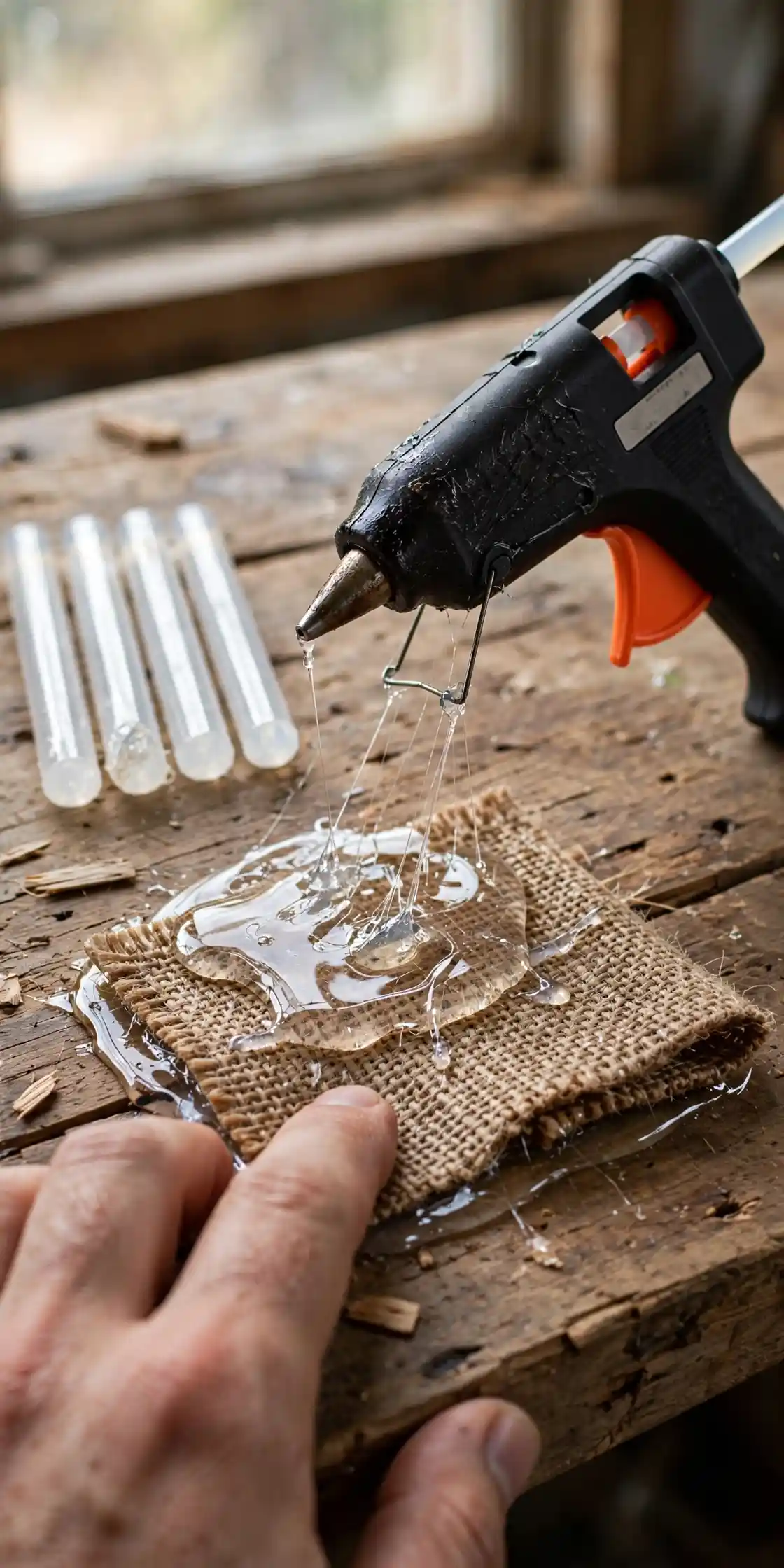
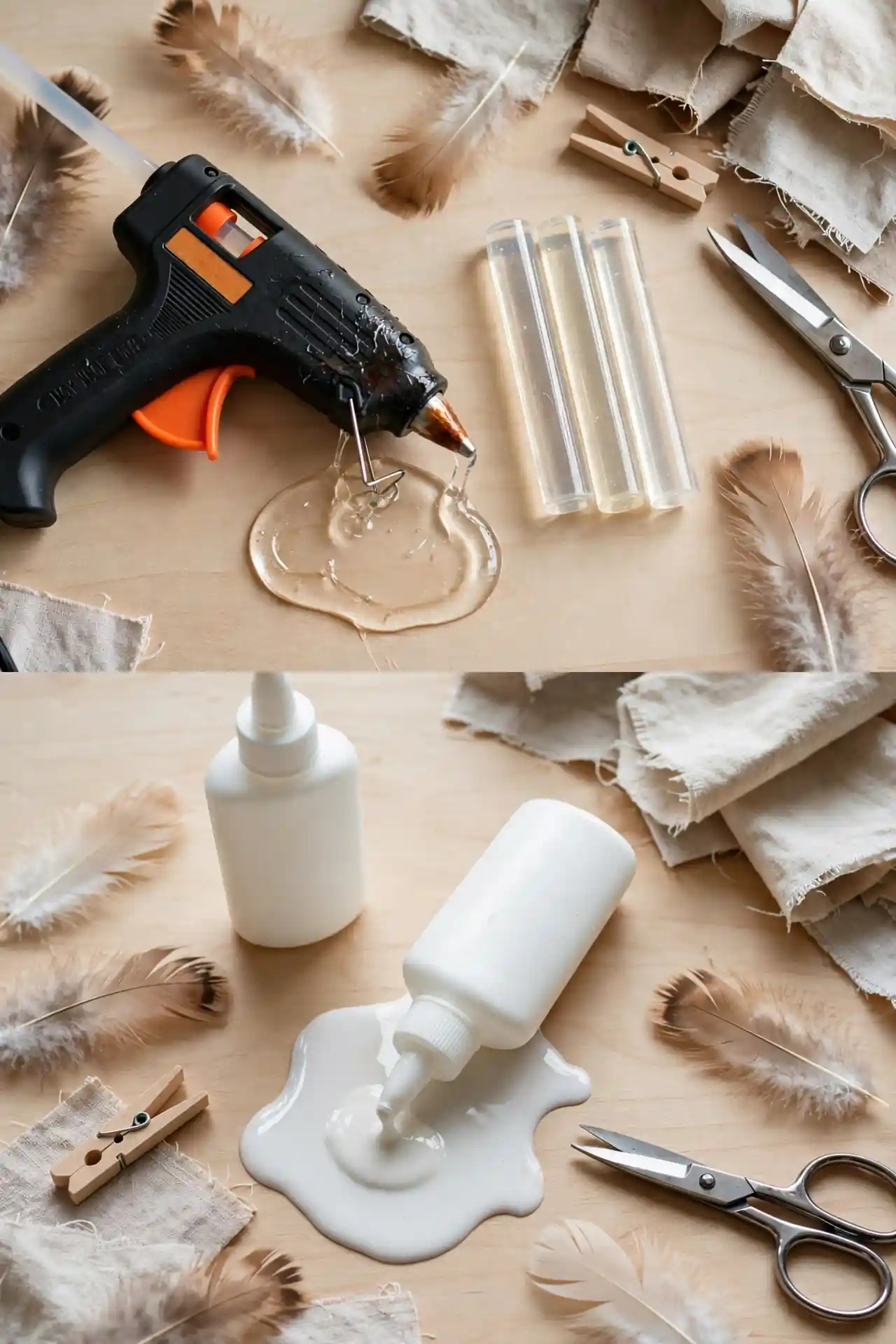
Hot glue comes in solid stick form and is used with a hot glue gun. The gun heats the stick until it melts into a thick, sticky liquid, which you apply directly to your material.
Within seconds to a couple of minutes, the glue cools and hardens, bonding the two surfaces together.
The biggest selling point of hot glue is speed. There’s no waiting around for it to dry — you apply it, press your pieces together, and hold for a few seconds while it sets.
⚡ Sets in seconds — no waiting, just apply, press, and hold for a few seconds.
This makes it a favorite for quick projects, temporary fixes, and anything involving 3D construction, like foam models, wreaths, or fabric embellishments.
Hot glue also comes in different formulas. Standard hot glue sticks work well on wood, cardboard, fabric, and plastic.
Low-temperature glue guns and sticks are designed for delicate materials like ribbon, silk flowers, or thin foam that could melt or warp under high heat.
What Is Craft Glue?
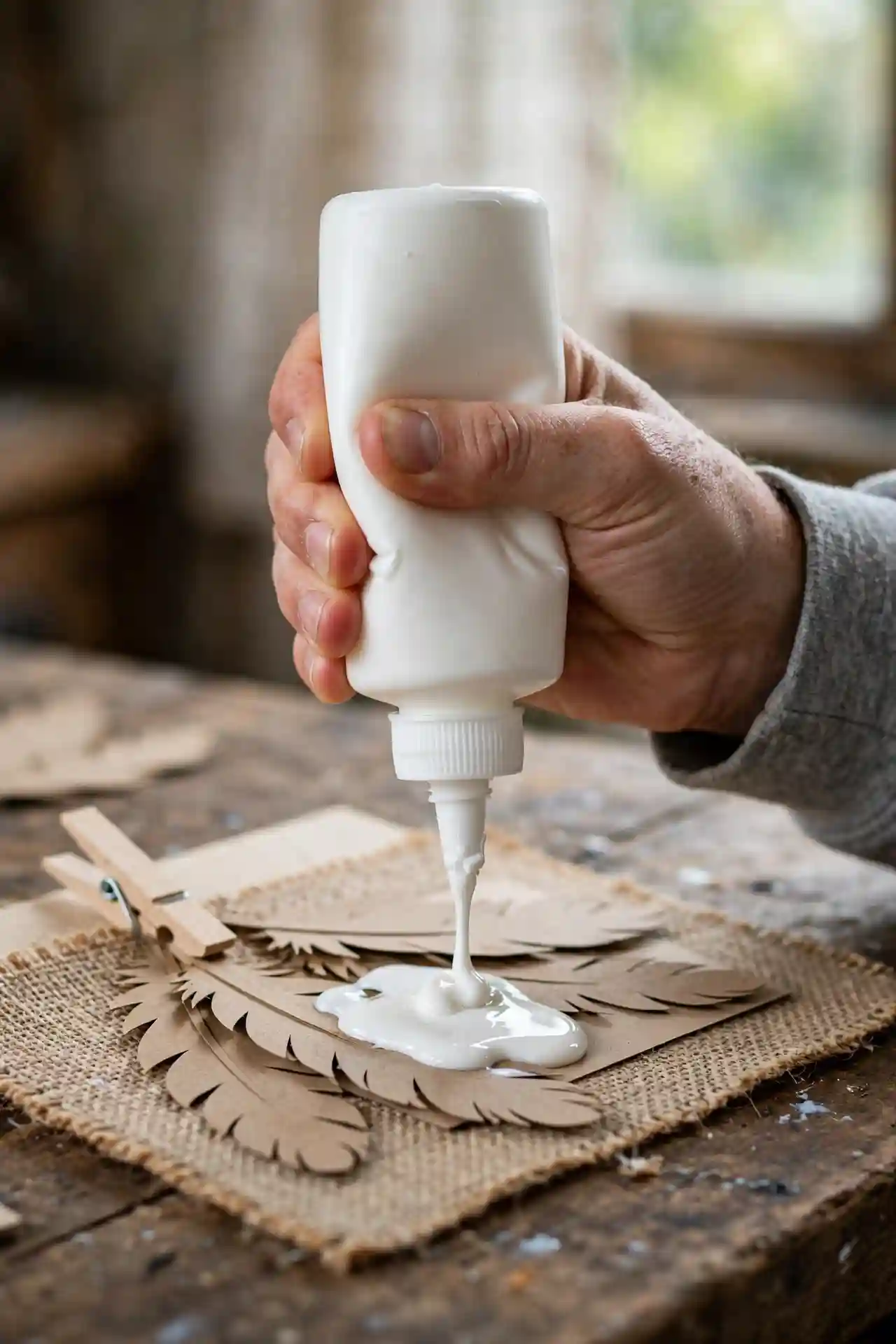
Craft glue, sometimes called all-purpose glue or white glue, is a liquid adhesive that comes in a squeeze bottle.
Unlike hot glue, it doesn’t require any tools or heating — you simply squeeze it onto your surface, press the pieces together, and let it air dry.
Depending on the glue and the materials involved, drying can take anywhere from 20 minutes to a few hours for a full cure.
⏳ Drying Time
Craft glue is water-based, which makes it easy to clean up with a damp cloth while it’s still wet, and it dries clear or slightly translucent.
This makes it ideal for paper crafts, scrapbooking, school projects, and anything where a clean, seamless finish matters more than speed.
There are also specialty versions of craft glue, like fabric glue, tacky glue (a thicker, faster-drying variation), and glue formulated specifically for wood or ceramics.
Key Differences at a Glance
| Factor | 🔥 Hot Glue | 💧 Craft Glue |
|---|---|---|
| Dry Time | Seconds | 20 min – hours |
| Best For | 3D, plastic, wood | Paper, fabric |
| Kid-Safe? | No — gets hot | Yes |
Application Method Hot glue requires a glue gun and heat. Craft glue is applied straight from the bottle at room temperature.
Drying Time Hot glue sets in seconds. Craft glue takes much longer to dry and even longer to fully cure.
Bond Strength Hot glue creates a strong initial bond that’s great for holding 3D shapes together, but it can become brittle over time and may not hold up well under heat or heavy stress.
Craft glue often creates a more flexible, long-lasting bond once fully cured, especially on porous materials like paper and fabric.
Safety Hot glue guns get very hot, and the glue itself can cause burns if it touches skin. Craft glue is non-toxic and safe for kids to use with supervision, which is why it’s a staple in classrooms.
⚠️ Kid Safety Tip: Craft glue is non-toxic and burn-free, making it the go-to choice for classrooms and young children.
Cleanup Wet craft glue wipes away easily with water. Hot glue, once it cools, hardens into strings and blobs that need to be peeled or scraped off.
Surface Compatibility Hot glue works well on a wide range of materials, including plastic, wood, and fabric, and it bonds quickly to uneven or 3D surfaces.
Craft glue works best on porous materials like paper, cardboard, and some fabrics, where it can soak in and form a strong hold.
Which One Should You Use?
The right glue really depends on your project.
Choose hot glue if you’re working on something that needs to hold its shape immediately, like a costume, a floral arrangement, a foam board display, or anything with 3D elements.
🔥 Choose Hot Glue If:
Working with 3D shapes, plastic, or need instant hold
💧 Choose Craft Glue If:
Working with paper, fabric, or need a clean finish
It’s also great when you’re gluing non-porous materials that craft glue struggles to bond, like plastic or metal trim.
Choose craft glue if you’re working with paper, cardstock, or fabric, and you want a clean, seamless finish without visible glue strings.
It’s also the safer, more forgiving option for young children, since there’s no risk of burns and mistakes can be wiped away before they dry.
Many crafters actually keep both on hand, since most involved projects call for a mix of adhesives depending on the materials and steps involved.
Final Thoughts
Hot glue and craft glue aren’t competitors — they’re tools designed for different jobs. Hot glue offers speed and strength for 3D and non-porous materials, while craft glue offers a cleaner, more flexible bond for paper and fabric-based projects.
Understanding what each one does best means fewer ruined projects, fewer burnt fingers, and a lot more time spent actually creating instead of troubleshooting your adhesive.